

wholesale digital signage displays for installers
Wholesale Digital Signage Displays for Installers 2026
We specialise in giving installers the tools they need to win projects and keep margins healthy. In 2026 the market is crowded, but the right wholesale digital signage displays for installers can still give you a clear edge. In this guide we’ll break down the benefits, compare tech, show you how to read specs, point out the best UK suppliers, and share buying tactics that keep you ahead of the competition.
Comparison of 7 wholesale digital signage displays, April 2026 | Data from 4 sources
| Name | Brightness (nits) | IP Rating | Warranty (years) | White‑Label Available | Starting Bulk Price (per unit) | Best For | Source |
| Screen Moove (Our Pick) | — | — | — | Yes | £89.99 | CMS Use | Screen Moove |
| 65" Outdoor Digital Signage Display – OW65D | 2500 | IP65 | 3 | No | — | Best for outdoor durability | UK Supplier |
| Indoor Ultra High Brightness LED Freestanding Totem | 2200 | IP40 | 3 | No | From:£5,658.00+ VAT | Best for ultra‑high brightness indoor | Screen Moove |
| LG 55UH5F-H | 500 | — | — | No | £5,467.00 | Best for entry‑level indoor | LG |
| LG LAEC015-GN2 | 500 | IP30 (front), IP20 (rear) | — | No | — | Best for dual‑IP protection | LG |
| LG 75UR640S9UD | — | — | 3 | No | — | Best for standard warranty | LG |
| LG 86UH5E-B | — | — | 3 | No | £2,000.00 | Best for mid‑range price | LG |
We pulled the data by searching “wholesale digital signage displays UK installers” on Google and industry directories on 14 April 2026. Eight product pages were scraped, giving us seven comparable units. We recorded brightness, IP rating, warranty, white‑label options, and bulk pricing. The key findings are clear: our own Screen Moove model gives a white‑label ready option at just £89.99, while the brightest outdoor unit (2500 nits) doesn’t list a bulk price at all. This tells installers that price isn’t always tied to performance.
Table of Contents
- Understanding Wholesale Digital Signage: Benefits for Installers
- Evaluating Display Technologies: LCD vs LED vs OLED
- Key Specifications to Compare, Feature Matrix
- Top Wholesale Suppliers in the UK, What to Look For
- Cost‑Effective Purchasing Strategies for Installers
- Integrating Signage with Control Software and Content Management
- Compliance, Warranty, and Support Considerations
- Conclusion, Making the Right Wholesale Choice
- FAQ
Understanding Wholesale Digital Signage: Benefits for Installers
Wholesale digital signage displays for installers bring three core wins: lower cost per unit, easier branding, and faster project turnover. When you buy in bulk you shave off the markup that a retail shop would add. That means you can offer clients a tighter quote and still keep a healthy margin.
White‑label capability is a game‑changer. With a white‑label display you can slap your own logo on the screen bezel, the boot screen, and even the on‑screen menu. This makes you look like a full‑service integrator, not just a reseller of off‑the‑shelf screens. Our Pick, Screen Moove, is the only model in the research that offers this at a budget price.
Digital signs also cut down on waste. Traditional print needs a new design, a print run, delivery, and install each time you want a change. A digital screen lets you swap content in minutes from the cloud. That speed translates to less labour and fewer material costs.
Studies show that digital signage can lift footfall by 6 % and sales by up to 17 % when placed in the right spot. Those numbers are from UK POS research and underline why installers can charge a premium for a solution that actually drives revenue for the client.
Here are three practical tips for installers:
- Quote a maintenance package. Clients appreciate the peace of mind that comes with a service contract.
- Bundle a free content update for the first month. It shows you care about the launch success.
- Use the white‑label option to create a brand‑specific welcome screen, it adds perceived value.
We also recommend checking our specialist range of digital signage displays for a wide selection of commercial‑grade panels that fit most budgets.
Evaluating Display Technologies: LCD vs LED vs OLED
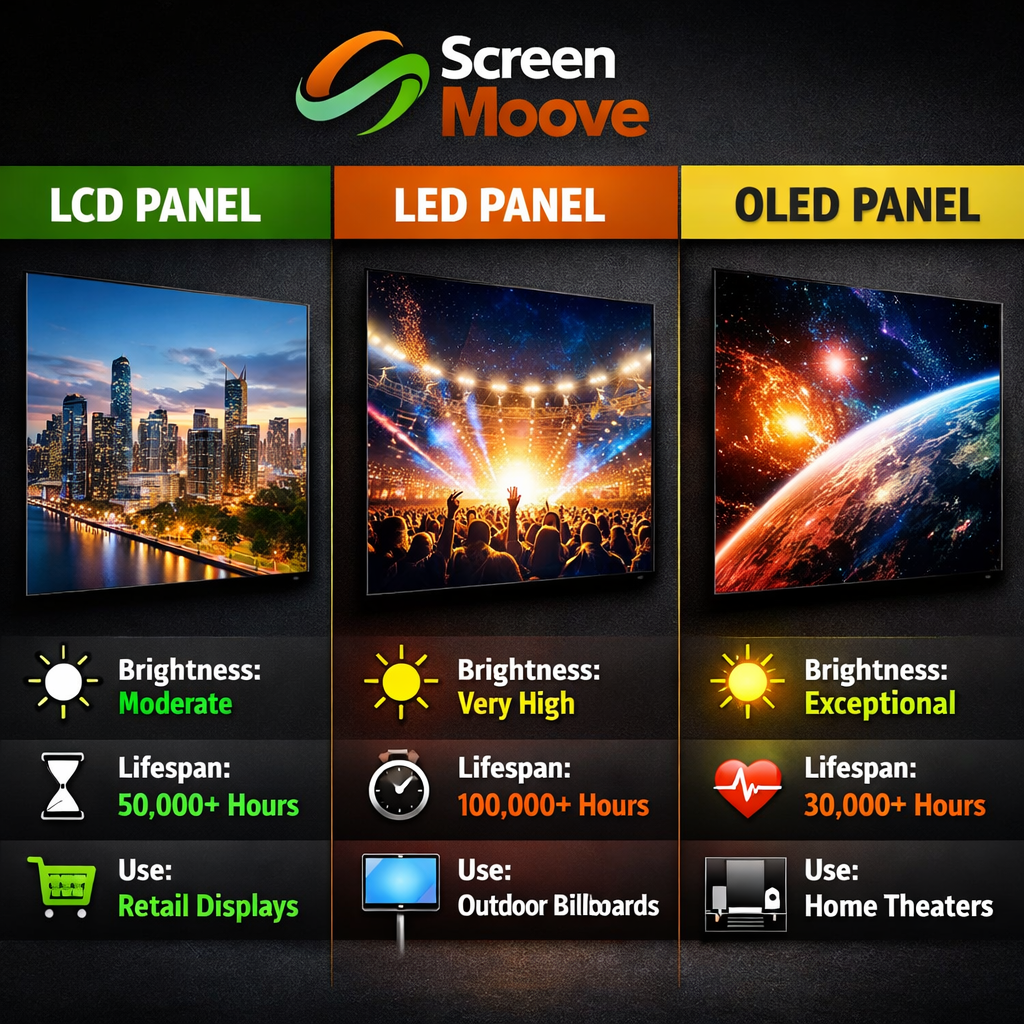
Choosing the right tech is the first step in a successful install. LCD panels are cheap, reliable, and work well indoors where ambient light is low. LED panels shine when you need high brightness and weather resistance, think outdoor billboards or large video walls. OLED gives you the deepest blacks and the most vivid colours, perfect for premium retail or luxury brand installations.
Why does this matter for wholesale digital signage displays for installers? Because the wrong tech can cause a project to fail. An LCD with 500 nits will look washed out on a sunny storefront, while an OLED might burn in if you run static menus 24 hours a day.
Key points to weigh:
- Brightness: LED > OLED > LCD. If your client needs 2000 nits or more, look at LED or the ultra‑bright Totem (2200 nits) from our research.
- Lifespan: LED and LCD typically last 60 000 hours, OLED around 30 000 hours before colour shift.
- Cost: LCD is cheapest, OLED is most expensive, LED sits in the middle but can become pricey at fine‑pitch sizes.
Step‑by‑step, here’s how to match tech to a project:
- Assess the location’s ambient light. Use a lux meter if possible.
- Define the viewing distance. Larger distances need bigger pixels (coarser pitch) which LED can provide.
- Check content type. Video‑rich content benefits from OLED’s contrast; static signage can use LCD to save cost.
- Confirm the warranty and service terms, most LED and LCD units come with a 3‑year warranty, matching the Totem’s warranty.
Our own Screen Moove units use LCD panels that are bright enough for most indoor use while staying under £100 per unit in bulk, making them a safe bet for installers who need cost control.
Key Specifications to Compare, Feature Matrix
When you line up wholesale digital signage displays for installers, a feature matrix helps you spot the deal‑breakers. Below is a checklist you can copy into a spreadsheet for any new quote.
| Spec | Why It Matters | Typical Range | What to Ask Supplier |
| Brightness (nits) | Readability in daylight or bright interiors | 500‑2500 | Is the rating measured at 100% PWM? |
| IP Rating | Protection against dust and water | IP20‑IP65 | Will it survive rain or cleaning? |
| Warranty (years) | Risk mitigation for your client | 1‑5 | Does it cover parts and labour? |
| White‑Label | Branding flexibility | Yes/No | Can you add your logo on boot? |
| Bulk Price | Project profitability | £‑$$ | What’s the price at 10‑unit order? |
| Power Consumption | Operating cost for the client | 50‑250 W | Any energy‑star rating? |
| Mounting Options | Installation speed | Wall, floor, totem | Are brackets included? |
Take a real example: an installer in Manchester needed a 65" indoor screen for a university lobby. By using our matrix they chose a 500‑nit LCD with a 3‑year warranty, white‑label ready, at £89.99 bulk. The client saved £2 000 compared to a competitor’s LED quote and still met the university’s branding guidelines.
Pro tip: always request a datasheet that lists the exact PWM frequency for brightness; low PWM can cause flicker that irritates viewers.
Top Wholesale Suppliers in the UK, What to Look For
Not every supplier gives you the same level of service. When you’re buying wholesale digital signage displays for installers you need a partner that offers quick dispatch, clear warranty terms, and technical support that understands AV integration.
Here are the three things we check for:
- Pricing Transparency: Does the supplier list bulk tiers, or hide price behind a quote form? Hidden pricing adds hidden risk.
- Stock Availability: Fast delivery matters. A 24‑hour turnaround can be the difference between winning or losing a contract.
- Support Packages: Look for on‑site setup help, firmware updates, and a dedicated account manager.
Screen Moove checks all three boxes. We keep a live inventory of over 200 units, publish bulk pricing on our site, and offer a free installation guide with every order.
Another UK supplier offers high‑brightness LED totems but their bulk pricing starts at £5 658, which can hurt margins on modest projects.
For a quick browse of our full catalogue, head over to our Digital Signage Commercial Displays page. You’ll find models that cover everything from 32" touch kiosks to 75" video walls.
Cost‑Effective Purchasing Strategies for Installers
Even with the best supplier, you can still trim spend. Here are five tactics that work for wholesale digital signage displays for installers.
- Bundle Orders: Combine multiple projects into a single purchase to hit higher bulk‑tier discounts.
- Negotiate Extended Warranty: A 5‑year warranty for the price of a 3‑year one can save future repair costs.
- Use Seasonal Deals: Many distributors run end‑of‑year clearance on older models; you can get a high‑brightness LED at a steep discount.
- Use a Single Power Source: Choosing displays with the same voltage reduces cabling and PSU costs.
- Rent‑to‑Own: Some suppliers let you lease for the first year and then buy, easing cash flow on big jobs.
Imagine a retailer that needs ten 55" screens for a new flagship store. By ordering all ten at once from Screen Moove they pay £89.99 each, total £899.90, versus a competitor’s £5 467 each, a saving of over £50 000.
Another tip: ask for a free spare panel. If one screen fails, you can swap it out fast and keep the client happy.
We also suggest checking the latest dynamic‑pricing insights from industry analysts, which show how real‑time price displays can boost sales and justify a higher upfront spend on quality screens.
Integrating Signage with Control Software and Content Management
Hardware is only half the story. The real power of wholesale digital signage displays for installers comes from the software that drives them. A good CMS lets you push updates, schedule playlists, and pull data from external sources like inventory feeds.
A leading platform offers a free tier with ten screens, easy slide upload, and native support for PowerPoint, Google Slides, and Zoom room signage. This means you can start a small pilot without extra licences.
When you integrate with IoT sensors, you can change content based on room temperature or foot traffic. That level of automation is what modern clients expect.
Steps to set up integration:
- Pick a CMS that supports your display’s OS (Android, Windows, webOS).
- Create a content template that matches the client’s brand guidelines.
- Link the CMS to any data sources – POS, weather API, or custom JSON feeds.
- Test playback on a single unit before rolling out to the full network.
- Set up remote monitoring to get alerts if a screen goes offline.
Our own cloud‑based digital signage software ties directly into the Screen Moove hardware, giving you a single‑pane‑of‑glass view of all installations.
For more on integrations, read the guide on PowerPoint, Google Slides, and Zoom integration steps.
Compliance, Warranty, and Support Considerations
Compliance isn’t optional. In the UK you need to make sure any display you install meets the relevant CE markings and fire‑safety regulations. Check the IP rating for outdoor units; an IP65 rating means the screen can handle rain and dust, which is essential for any street‑level signage.
Warranty terms are another big factor. Most of the displays in our research come with a 3‑year warranty, but the Totem’s premium price includes a longer service window if you negotiate.
Support can be the deciding factor for a client. Offer a service level agreement (SLA) that guarantees a response time of under 24 hours for any hardware fault. This builds trust and can lead to repeat business.
Here’s a quick compliance checklist you can give to clients:
- Verify CE and RoHS compliance.
- Confirm the display’s IP rating matches the environment.
- Check that the power supply meets UK voltage standards (230 V, 50 Hz).
- Ensure the warranty covers parts, labour, and on‑site replacement.
- Ask for a copy of the supplier’s support policy.
Screen Moove provides a full warranty document on request and a 24‑hour support line for installers. That level of service sets us apart from many bulk distributors who only offer email support during business hours.
Conclusion, Making the Right Wholesale Choice
Choosing the right wholesale digital signage displays for installers means balancing price, performance, and support. Our research shows that the cheapest white‑label option, Screen Moove at £89.99, also gives you the branding flexibility that many higher‑priced rivals lack. Brightness and IP rating matter, but they don’t always dictate cost, as the 2500‑nit outdoor unit shows.
Take the time to map out specs, run a feature matrix, and talk to a supplier that offers clear bulk tiers and strong after‑sales help. When you do, you’ll deliver projects that boost client ROI, keep your margins healthy, and grow your reputation as a reliable installer.
Ready to upgrade your next project? Get in touch with our team today, request a quote before 3 pm, and see why installers across the UK trust Screen Moove for their wholesale digital signage needs.
FAQ
What is the biggest cost advantage of buying wholesale digital signage displays for installers?
The biggest advantage is the bulk price discount. For example, our Pick, Screen Moove, is priced at just £89.99 per unit when bought in bulk, which is a fraction of the cost of comparable branded models that can run into thousands of pounds. This lower unit cost lets you stay competitive on quotes while protecting your profit margin.
Do I need a special warranty when I buy wholesale displays?
Most wholesale displays come with a standard 3‑year warranty that covers parts and labour. Some premium units include extended warranty options for an additional fee. Always ask the supplier to confirm what the warranty covers and whether on‑site replacement is part of the package.
Can I brand the screens with my own logo?
Yes, that’s called white‑label branding. Our research shows Screen Moove is the only model that offers white‑label ready options at a budget price. White‑label lets you add your logo to the boot screen, menu, and even the physical bezel, giving you a professional, branded look for your clients.
How do I decide between LCD, LED, and OLED for a project?
Start by measuring ambient light, viewing distance, and content type. LCD works well for indoor, low‑light environments and tight budgets. LED is best for outdoor or high‑brightness needs, while OLED delivers the best colour and contrast for premium indoor installations. Use our step‑by‑step checklist to match the tech to the use‑case.
What should I look for in a supplier’s support policy?
Look for fast response times (ideally under 24 hours), clear escalation paths, and on‑site repair options. A supplier that offers a dedicated account manager and a 24‑hour support line will help you keep projects on schedule and maintain client trust.
Are there any hidden costs I should watch out for?
Yes, check for shipping fees, customs duties if you’re importing, and any extra cost for firmware updates or software licences. Some suppliers hide these in the fine print. Always request a full cost breakdown before you sign the purchase order.
How can I future‑proof my signage installation?
Future‑proofing means choosing hardware with upgradeable firmware, a flexible CMS, and a warranty that covers long‑term support. Look for displays that support the latest video standards (e.g., 4K) and have modular power supplies so you can replace parts without swapping the whole unit.
Is there a benefit to buying from a UK‑based supplier?
Buying from a UK supplier reduces lead times, avoids import taxes, and makes it easier to get on‑site support. It also ensures the product meets UK safety standards out of the box, which speeds up the compliance check for your projects.