


Blog post
Video Wall Displays for Business Spaces
A poorly planned screen wall is expensive twice - once when you buy it, and again when you realise the bezels are too thick, the brightness is wrong, or the content was never designed for the layout. Video wall displays work best when they are specified as part of a business objective, not just chosen for visual impact.
For retailers, corporate offices, hospitality venues, control rooms and education settings, a video wall can turn a blank surface into a serious communication tool. It can drive footfall, support wayfinding, strengthen brand presence or present operational data clearly at scale. The value comes from getting the screen technology, mounting method, content format and support model right from the start.
What video wall displays actually do well
Video wall displays are commercial screens designed to operate together as one large visual canvas. Unlike a standard TV setup, they are built for longer run times, tighter panel consistency, controlled heat management and installation in fixed commercial environments. The purpose is not simply to make an image bigger. It is to create a format that remains visible, legible and reliable in spaces where a single screen would either look underpowered or be physically impractical.
That matters in real buying scenarios. A fashion retailer may need a window-facing wall that holds attention from the pavement. A university might want a large-format display for campus messaging in an atrium. A corporate reception could need a clean branded backdrop that also handles video, dashboards and event messaging. In each case, the technical answer is different.
Choosing the right type of video wall display
Most business buyers will be comparing LCD video wall displays with direct view LED. Both have a place, but they solve different problems.
LCD video wall displays
LCD video walls remain a strong choice for indoor commercial projects where image detail, cost control and a structured layout matter most. They use multiple narrow bezel commercial panels mounted in a matrix such as 2x2, 3x3 or wider bespoke configurations. The main advantage is predictable image quality at a comparatively accessible project cost.
They suit retail stores, meeting spaces, reception areas, education buildings and hospitality environments where viewers are not standing extremely close to a bezel-sensitive design. Modern ultra-narrow bezel panels reduce the interruption between screens, but the join lines do still exist. For many applications that is perfectly acceptable. If the content is designed properly, the visual result is still strong.
Direct view LED walls
LED is often chosen where scale, brightness and visual impact are the priority. Instead of tiled LCD panels, the display surface is made from LED modules that form a near-continuous image. This makes LED particularly effective in large public spaces, high-profile corporate installations, event venues and bright environments.
The trade-off is that LED usually requires a higher investment and more attention to pixel pitch. A wall viewed from a short distance needs a finer pixel pitch, which increases cost. In a large atrium or exterior-facing installation, a wider pitch may be perfectly suitable. The right choice depends on viewing distance, ambient light and the level of visual refinement expected.
Key specifications that matter before you buy
A video wall should be specified around the room, the audience and the content. Buyers often start with screen size, but that is only one part of the picture.
Bezel width and visual continuity
For LCD video wall displays, bezel width has a direct effect on how content appears across the wall. Narrower bezels create a more unified image and are usually preferred for premium customer-facing spaces. Wider bezels can still work in back-of-house or information-led environments where content is more segmented.
Brightness
Brightness needs to match ambient light conditions. A reception wall in a controlled interior setting will need a different spec from a shopfront installation exposed to strong daylight. Over-specifying brightness adds cost and power usage. Under-specifying it leads to washed-out visuals and poor readability.
Orientation and layout
Not every wall should be a standard landscape grid. Portrait configurations can work well for wayfinding and advertising. Stretched layouts may suit timeline content or branded visual strips. The physical shape of the installation should support the content strategy rather than force it into an awkward format.
Run time and reliability
Commercial-grade panels are built for extended daily use, often 16/7 or 24/7 depending on the model. That is a major difference from consumer TVs. If the display is part of a customer-facing environment or operational setting, reliability and warranty support matter as much as image quality.
Where video wall displays make commercial sense
The strongest projects are built around a clear operational use case. If the wall is only there to fill space, it will be hard to justify over time.
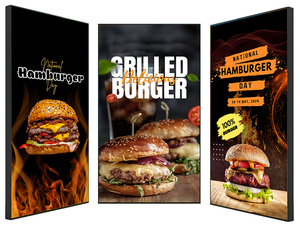
In retail, video walls are commonly used for campaign messaging, seasonal promotions and brand storytelling. They can anchor a flagship environment or add movement to a window display where static print no longer delivers enough stopping power.
In corporate settings, they are often installed in receptions, briefing rooms and collaboration spaces. A well-planned wall can support visitor messaging, internal communications and presentation use without needing multiple separate displays.
In hospitality, the attraction is flexibility. Hotels, bars and entertainment venues use video walls for event schedules, promotional content and ambient branded visuals. The same screen real estate can serve different functions throughout the day.
For education and public sector sites, the priority is usually information clarity. Large-format messaging in halls, libraries and shared spaces can improve notice visibility, navigation and engagement, especially across multi-building sites.
Content is where many projects go wrong
Even high-spec video wall displays underperform if the content is simply stretched from a standard 16:9 screen. A wall needs content designed for its resolution, shape and viewing distance.
That affects typography, motion, spacing and image composition. Text that reads well on a single display can become awkward or unreadable when split across bezels. Fast-moving detail may look impressive in a design mock-up but fail in a real environment where viewers only glance at the screen briefly.
For promotional use, simple and bold usually wins. For information-led use, zoning can be effective, with one section for key messages and another for live updates, feeds or schedules. The more functional the environment, the more important clarity becomes.
Installation is not just a mounting job
A video wall installation involves more than fixing screens to a wall. Structural suitability, cable management, ventilation, service access and alignment all need proper planning. If one panel is slightly out, the whole wall looks compromised.
Mounting systems also matter. Pop-out mounts can make ongoing maintenance far easier, particularly in larger matrices. In high-traffic commercial environments, tidy rear access and future serviceability should be part of the decision from day one.
There is also the question of source hardware and control. Some projects only need a straightforward media player. Others need matrix switching, remote content updates, scheduling, or integration with wider digital signage networks. That is where a specialist supplier adds value, because the screen itself is only one part of the system.
Should you choose a standard configuration or a custom solution?
It depends on the site and the objective. A standard 2x2 or 3x3 LCD wall is often the quickest route for businesses that need a proven format with manageable cost and straightforward installation. This suits many receptions, shops and meeting environments.
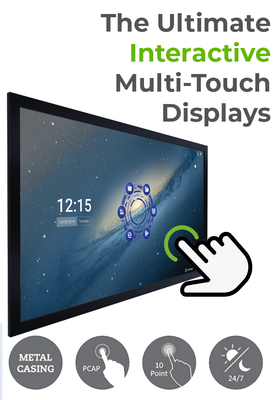
Custom solutions make more sense when the wall is central to the customer experience, the available space is unusual, or the content requirement is more ambitious. That may mean non-standard dimensions, curved LED, recessed mounting, higher brightness, touch capability or integration with software platforms across multiple locations.
There is no advantage in specifying a custom build for the sake of it. The best result is the one that fits the space, the budget and the business outcome without adding unnecessary complexity.
What buyers should ask before committing
Before approving a project, it is worth pressure-testing a few practical points. How far away will people view the wall from? What does the lighting look like throughout the day? Will the content be centrally managed? Does the business need next-day replacement options, on-site support or installation across more than one site?
These questions tend to shape the specification more than the headline screen size. They also affect total cost over time. A cheaper wall that is difficult to maintain or poorly matched to the environment often costs more in disruption, rework and shortened service life.
For businesses buying in the UK, supply reliability, installation support and technical guidance are not secondary extras. They are part of the buying decision, especially where deadlines are fixed or multiple stakeholders need sign-off.
A good video wall should feel deliberate the moment it is switched on. It should suit the space, support the message and keep working without becoming a maintenance problem. If you start with the use case rather than the screen count, you usually end up with a better result.


