


Case study
Best High Brightness Window Screens
A shopfront screen that looks washed out by lunchtime is not a signage strategy - it is wasted budget. The best high brightness window screens are built to stay visible in direct sunlight, hold colour and contrast across long opening hours, and run reliably in commercial settings where a domestic TV would struggle.
For retail, hospitality and customer-facing business environments, the buying decision usually comes down to more than brightness alone. You need the right panel size for the window, the right orientation for your content, a media player or CMS that fits your workflow, and a mounting approach that keeps the installation clean and secure. Get those elements right, and a window display becomes a consistent revenue tool rather than a screen that simply takes up glass space.
What makes the best high brightness window screens?
High brightness window screens are commercial displays designed to remain readable in bright ambient light, including sun-facing shopfronts. In practice, that means brightness levels far above a standard indoor display. Where a conventional office screen may sit around a few hundred nits, a proper window-facing digital signage display often starts around 1,500 nits and can go much higher depending on the location.
Brightness matters because ambient light competes directly with your content. If the screen cannot overpower reflections and daylight, promotions lose impact, menu boards become difficult to read, and motion graphics look flat. In retail and hospitality, that can affect footfall and conversion more quickly than many buyers expect.
The best options also combine brightness with commercial-grade cooling, panel durability, landscape or portrait flexibility, and the ability to operate for extended daily hours. This is where many buyers make the right move by stepping away from consumer TVs. A domestic set may look cost-effective on paper, but in a front window it usually falls short on visibility, duty cycle, warranty cover and long-term reliability.
Choosing the best high brightness window screens for your site
The right model depends on the environment first, not the specification sheet alone. A shaded high street frontage has different demands from a south-facing glazed unit in a shopping centre. If direct sunlight hits the panel for long periods, you will need more than a modest uplift in brightness.
Screen size should be driven by viewing distance and content layout. A larger display creates impact, but only if the text remains proportionate and the window can carry it without looking overcrowded. For menus, pricing and smaller promotional detail, the content design often dictates the minimum screen size more than the window itself.
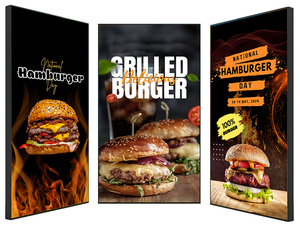
Orientation is another practical decision. Portrait is popular for fashion, beauty and promotional posters because it mirrors print advertising formats. Landscape often suits menu boards, wider promotional messages and video-led campaigns. If you plan to change use over time, choose hardware that supports both without complication.
Operating hours matter too. Many commercial buyers need displays to run all day, every day, or close to it. That makes duty cycle, thermal management and warranty support just as important as headline brightness. A brighter screen that overheats or degrades quickly is not the better investment.
Start with brightness, but do not stop there
For many buyers, brightness is the first filter. That is sensible, but it should not be the only one. A 3,000-nit display sounds impressive, yet if the panel coating, viewing angle or internal cooling are not suitable, performance can still disappoint.
Equally, not every installation needs the highest available nit rating. In some storefronts, 1,500 to 2,500 nits is entirely appropriate. In harsher conditions, stepping higher makes sense. The best commercial advice usually starts with the window position, the sun path, and how the content will be used across the day.
Content management affects screen choice
A window display is only effective if the content stays current. Businesses running regular offers, daypart menus or multi-site campaigns should think early about CMS compatibility and playback hardware. An excellent screen paired with a clumsy update process soon becomes a burden for store teams.
This is especially relevant for restaurants, takeaways and retail chains. If pricing, promotions or campaign assets change often, centralised content control saves time and keeps branding consistent. It also reduces the temptation to leave stale content on screen simply because updating it feels awkward.
Key specifications worth checking
Brightness is measured in nits, but several supporting specifications shape real-world performance. Contrast ratio matters because high brightness without decent contrast can still leave visuals looking weak. Anti-reflective treatment is also valuable, particularly where large glazed frontages create glare from multiple angles.
Resolution should match both the screen size and the content type. Full HD can still be perfectly suitable in many installations, especially for smaller formats and straightforward promotional layouts. For larger screens or more detailed visual content, 4K gives more flexibility and cleaner presentation.
Commercial duty cycle is one of the biggest distinctions between signage hardware and general consumer displays. Buyers should also check operating temperature, panel orientation support, integrated media player options, and connectivity. If the display will be part of a larger signage network, compatibility with your chosen software platform is essential.
Bezel design can matter more than expected in premium retail settings. A slim, tidy finish helps the installation look intentional and professional from outside the premises. Mounting options matter as well, especially if you need ceiling suspension, floor-to-ceiling solutions or precise positioning close to the glass.
Best fit by business type
Retailers usually want high visual impact and strong motion content, especially for seasonal campaigns and new product launches. In this case, brightness, image quality and portrait format options often take priority. Fashion, electronics and mobile retail environments also benefit from displays that maintain strong colour reproduction under varied daylight conditions.
Restaurants, cafés and takeaways tend to focus more on legibility and ease of content updates. Promotions, pricing and menu rotations need to stay clear from the pavement, even during bright afternoon trade. A screen that works well with menu board templates and scheduled content changes can be the smarter choice than one focused purely on dramatic video output.
Corporate settings, estate agencies, gyms and healthcare providers often use window screens for a mix of branding and practical messaging. Here, readability, reliability and low-maintenance operation usually matter most. The specification should still be commercial grade, but the best answer may be a balanced display rather than the most extreme model.
Installation can make or break performance
Even the best high brightness window screens can underperform if they are installed badly. Positioning too close to reflective surfaces, poor cable management, inadequate ventilation and the wrong bracket choice can all reduce the result.
This is one reason many business buyers prefer a full supply-and-install approach. It reduces compatibility issues, helps with neat presentation, and gives facilities or operations teams a clearer route for support. It also helps when displays are part of a wider rollout involving menu boards, additional in-store signage or centrally managed content.
Window depth and sunlight direction should be assessed before final product selection. In some sites, a display slightly repositioned away from the harshest angle of glare can deliver better visibility than a brighter panel placed badly. There is no single answer for every frontage, which is why site-led advice matters.
Common buying mistakes to avoid
The most common error is treating a window screen like a standard indoor display. That usually leads to poor visibility, shorter lifespan and frustration for staff. The second is overbuying brightness without thinking about content, software and installation.
Another frequent issue is choosing size based only on what fits physically. If the text is too small, or the layout is too busy to read from outside, the screen will not perform commercially. Good signage is a combination of hardware, placement and message discipline.
Finally, buyers sometimes overlook support. Commercial displays are infrastructure, not impulse purchases. Access to technical advice, compatible accessories, replacement options and installation expertise has real value, especially for multi-site operators and time-sensitive openings.
Making the right commercial decision
The best window screen is the one that stays readable, reliable and manageable in your specific environment. That means balancing nit level, duty cycle, size, orientation, software compatibility and installation method rather than chasing one headline specification.
For most businesses, the strongest outcome comes from choosing a commercial display solution that matches both the frontage and the operational reality behind it. If your team needs rapid rollout, dependable support and signage that works hard from day one, that is where a specialist supplier such as Screen Moove adds practical value. A bright screen gets attention, but the right one keeps delivering long after the launch offer has gone.