


Case study
12 Digital Signage Examples for Business
A promotion on a high street window screen does one job. A meeting room display outside a boardroom does another. Grouping them all under one label can make buying decisions harder than they need to be. The most useful way to review digital signage examples is by looking at the business problem each screen is meant to solve.
For UK buyers planning a rollout, the key questions are usually practical ones. Where will the screen sit? How bright does it need to be? Will staff update content daily, weekly or centrally across multiple sites? Once those answers are clear, the right display format tends to follow.
Digital signage examples by business use
1. Storefront window displays
A storefront screen is often the first step into digital signage because the return is easy to understand. It replaces printed posters, keeps promotions current and gives passers-by a reason to stop. In retail, estate agency and hospitality settings, these displays are frequently used to run timed offers, product campaigns or property listings.
Brightness matters more here than in many indoor applications. A standard commercial screen may work in a sheltered entrance, but full shopfront glazing with strong daylight usually calls for a high-brightness solution. The wrong specification can leave content washed out for most of the day, which defeats the point of the installation.
2. Digital menu boards
Menu boards are one of the clearest digital signage examples because they directly improve speed and consistency. Restaurants, cafés, takeaways and hotel food counters use them to update pricing, swap breakfast to lunch menus and promote high-margin items without reprinting anything.
The trade-off is content discipline. A digital menu board is only an upgrade if pricing, layouts and scheduling are managed properly. For multi-site operators, cloud-based content control is usually worth prioritising from the start. For a single location, a simpler setup may be perfectly adequate.
3. Freestanding digital totems
A freestanding totem works well where wall space is limited or where the screen needs to meet people in the flow of traffic. Shopping centres, receptions, exhibitions and showrooms often use them for promotions, wayfinding or brand messaging.
They also suit temporary campaigns better than fixed wall installations. That said, placement needs thought. A totem in the wrong spot can become visual clutter or even obstruct movement. In customer-facing environments, stability, cable management and commercial build quality matter just as much as panel size.
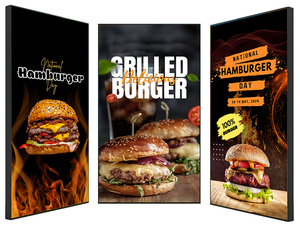
4. Hanging double-sided displays
Where footfall moves in two directions, double-sided screens can deliver better value than a single display. They are common in shopping malls, transport-adjacent retail, salons and hospitality venues where customers approach from either side.
This format is especially effective when ceiling or window mounting space is available but floor space is not. The main consideration is installation planning. Suspension points, viewing height and power access all need to be right, particularly in public-facing environments where reliability and finish are closely scrutinised.
Digital signage examples for internal communication
5. Reception and corporate lobby screens
In offices, a reception display usually supports one of three goals: welcome visitors, reinforce brand presence or communicate live information. This might include company news, safety notices, event schedules or room directions.
These screens are often overlooked as a basic branding feature, but they can reduce front-of-house workload when used properly. If visitors need directions, check-in guidance or meeting updates, clear digital messaging helps staff spend less time repeating routine information. A polished installation also sets the tone for clients and candidates walking through the door.
6. Meeting room booking displays
Outside meeting spaces, small-format room booking screens solve a common operational issue quickly. They show availability, upcoming bookings and room status at a glance, reducing wasted time and confusion.
This is one of the most functional digital signage examples because it connects directly to day-to-day efficiency. The requirement is not visual impact but compatibility. Buyers should focus on integration with their booking platform, mounting options, power delivery and long-term support rather than simply choosing the cheapest panel.
7. Staff communication screens
Warehouses, back-of-house hospitality areas, staff rooms and manufacturing sites often need a better way to share notices across shifts. A digital display can carry rotas, health and safety information, performance updates or HR messages without relying on printed boards that quickly go out of date.
The right hardware depends on the environment. In a clean office, a standard commercial display may be fine. In harsher settings, brightness, durability and viewing distance become more important. Content also needs ownership. If nobody is responsible for updates, the screen will lose value quickly.
Sector-specific digital signage examples
8. Education campus displays
Schools, colleges and universities use signage across entrances, corridors, canteens and lecture spaces. Typical use cases include event notices, timetable changes, safeguarding information, emergency messaging and wayfinding.
Education buyers often need a balance between value and central control. A network spread across several buildings benefits from content scheduling and user permissions, while a single sixth form common room may only need one standalone screen. The right answer depends on scale, but commercial-grade hardware is still the safer choice where screens run for long hours.
9. Hotel and hospitality information screens
Hotels use digital displays in receptions, conference areas, lifts, bars and restaurants. They can promote food and drink offers, direct guests to event rooms, display conference agendas or support branded welcome messaging.
This environment usually needs a more polished finish than purely functional office signage. Screen orientation, bezel design and installation quality all influence the impression on guests. For hospitality groups managing several properties, template-led content is useful because it keeps branding consistent while allowing each site to adapt local offers.
10. Wayfinding kiosks and interactive displays
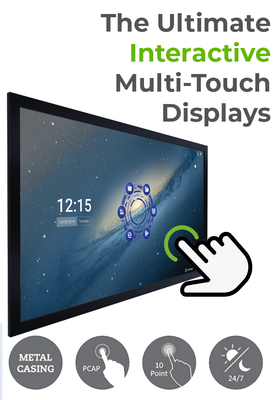
Interactive signage serves a different purpose from passive display screens. In hospitals, universities, museums, office receptions and large public venues, touchscreen kiosks help users find locations, browse information or complete self-service tasks.
These solutions are more demanding to plan because hardware is only one part of the project. The software interface, touch response, enclosure design and accessibility all affect the outcome. If the need is simple directional signage, a non-interactive display may be more cost-effective. If users need to search, select or register, a touchscreen becomes far more valuable.
11. Video walls for high-impact spaces
Video walls are designed for visibility and scale. They are commonly installed in control rooms, large receptions, showrooms, education spaces and event venues where a single screen would not deliver the same impact.
This is not always the right choice for standard business messaging. Video walls require more planning around content dimensions, mounting structure, calibration and service access. They suit organisations that genuinely need a larger visual canvas, not buyers simply looking for a bigger screen. When used in the right setting, however, they create a stronger focal point than almost any other format.
12. Outdoor digital signage
Outdoor displays are used for forecourts, drive-thrus, transport-adjacent sites, retail parks and external venue entrances. They can advertise offers, provide directions or support public information in all weather conditions.
Here, specification is critical. Weather resistance, operating temperature, brightness and enclosure quality are non-negotiable. An indoor display placed in a semi-exposed area is a false economy. Outdoor signage usually costs more upfront, but the alternative is poor performance and avoidable replacement.
What these digital signage examples show buyers
The lesson across these digital signage examples is simple: the screen type should follow the use case, not the other way round. A buyer comparing menu boards, kiosks and storefront displays is not choosing between similar products. They are choosing between different operating models.
That affects everything from content workflows to mounting method. A retailer with weekly campaigns may prioritise central software control and high brightness. A school may care more about easy updates across multiple departments. A corporate office may focus on room booking compatibility and a clean installation finish.
Commercial-grade hardware also makes a difference once networks scale. Consumer televisions can look attractive on price, but they are rarely the right fit for long operating hours, professional mounting or managed multi-screen deployments. Reliability, warranty support and compatibility with signage players and CMS platforms matter far more over time.
For buyers managing projects across more than one site, consistency is often the hidden cost saver. Standardising on suitable screen categories, approved mounts and a central content platform reduces support issues later. This is where a specialist supplier can add value, not just by supplying stock, but by matching hardware, software and installation requirements from the outset.
If you are reviewing options, start with the exact environment, viewing conditions and content plan. The best signage setup is rarely the most complicated one. It is the one that stays visible, stays current and keeps doing its job long after the installation team has left site.