
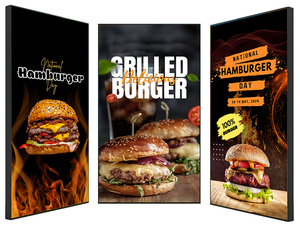


Most businesses have tried both. A printed poster here. A banner there. Maybe an A-board on the pavement. Traditional advertising remains familiar, but digital signage gives businesses a faster, more flexible and more commercially useful way to communicate.
Commercial display screens have become more affordable, easier to manage and better suited to everyday business use. With modern digital signage CMS software, businesses can update, schedule and manage content remotely instead of relying on printed material that quickly becomes outdated.
What Is Traditional Advertising in a Commercial Context?
In this context, traditional advertising means static, printed and non-digital formats used on-site or in-store. This includes printed posters, point of sale displays, vinyl banners, roller banners, pavement signs, lightbox inserts, window decals, chalkboards and whiteboards.
These formats still have advantages. They are familiar, low cost at small scale, require no power and can work well for messaging that rarely changes.
The problem is that most UK businesses do not operate with static messaging. Retailers run seasonal promotions. Restaurants change menus. Gyms update class schedules. Clinics need to share new information. Once content changes regularly, traditional print becomes slower, less flexible and more expensive over time.

What Is Digital Signage?
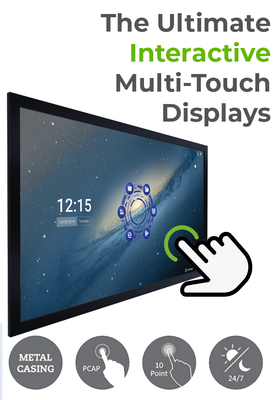
Digital signage - also referred to as electronic signage - refers to commercial display screens used to show dynamic content in business environments. This includes indoor commercial displays, outdoor high-brightness screens, digital menu boards, interactive kiosks, video walls, window-facing displays and digital notice boards.
Unlike printed signage, digital signage is driven by software. You can update content instantly, schedule different messages by time of day, manage multiple sites remotely and keep content fresh without a new print run.
Digital signage is not just a screen. It is a combination of commercial hardware, software and content strategy that helps businesses replace static communication with something more flexible, measurable and commercially useful.
Digital Signage vs Traditional Advertising: The Key Differences
| Factor | Digital Signage | Traditional Advertising |
|---|---|---|
| Update speed | Change content in seconds, often remotely. | Requires artwork, print, delivery and installation. |
| Cost over time | Higher upfront investment, lower long-term update costs. | Lower upfront cost, but repeated print costs per campaign. |
| Flexibility | Show different content by time, location or audience across every advertising screen. | One fixed message until replaced. |
| Brand impact | Motion, brightness and scheduling help each advertising screen stand out. | Static material can blend into busy environments. |
| Sustainability | Reusable screen hardware with no repeated print waste. | Ongoing paper, vinyl and disposal waste. |
| Reliability | Commercial screens are built for long operating hours. | Posters fade, banners get damaged and boards weather. |
Cost: The Real Numbers
Traditional advertising looks cheaper because the first purchase is usually low cost. A poster may only cost a few pounds and a roller banner may cost under £100. But those costs repeat every time your message changes.
Digital signage has a higher initial outlay because you need a commercial screen, mounting hardware and CMS software. However, once the system is installed, content updates become far cheaper and faster. For businesses that run regular campaigns, promotions or seasonal messages, the total cost of ownership often starts to favour digital over 12 to 24 months.
Key insight: digital signage is strongest when your business changes content often. If you update offers, prices, menus, events or customer messages every week, print quickly becomes the more restrictive option.
Speed, Flexibility and Customer Attention
This is where digital signage wins decisively. Traditional advertising requires a production cycle: design, artwork approval, printing, delivery and physical installation. That can take days or weeks.
Digital signage updates happen in seconds. A retailer can promote a flash sale the moment stock arrives. A restaurant can update lunch specials at midday. A gym can display a class cancellation instantly. That level of agility is simply not possible with printed materials.
Digital screens also capture attention because motion and brightness stand out in visually busy environments. On a high street, in a waiting room, inside a gym or near a point of sale, moving content is far harder to ignore than another poster on a wall.
Where Digital Signage Outperforms Traditional Advertising
Retail Environments
In retail, customers are already in your space and close to a purchase decision. Retail digital signage can promote upsells, limited offers, product launches and seasonal campaigns at the exact point where customers are making choices.
Window-facing displays can also help capture footfall from outside the store. Compared with static window vinyls or posters, bright moving content gives passers-by a stronger reason to stop and look.
Restaurants and Hospitality
Digital menu boards are one of the clearest examples of digital signage uk solutions replacing print. Restaurants, cafes and quick service venues can remove sold-out items, add daily specials, switch menus by time of day and promote high-margin products without reprinting boards.

Healthcare and Dental Practices
Waiting rooms are captive environments. Digital signage can replace leaflets and wall posters with appointment reminders, service information, health campaigns and practice updates that can be refreshed centrally.
Gyms and Leisure Facilities
Gyms need to communicate changing class schedules, PT availability, membership offers and motivational content. Digital screens remove the manual cycle of printing, laminating and updating noticeboards.
Promote offers, products and brand campaigns at point of decision.
Update menus, specials and promotional content instantly.
Share practice information, reminders and patient updates.
Display classes, memberships, PT offers and facility updates.
Where Traditional Advertising Still Has a Place
Digital signage is not always the right answer. Traditional print can still work for very low-footfall areas, short-term events, outdoor locations without power, or businesses with messaging that genuinely does not change.
For many established UK businesses, the best setup is a blend. Use digital signage for high-traffic, high-change-frequency locations and use print where screens are unnecessary or impractical.
Ready to explore digital signage for your business?
Browse ScreenMoove's commercial display screens or speak to our team for help choosing the right screen, software and installation setup.
Browse Digital Signage Displays Speak to Our TeamHow to Make the Switch: What to Think About First
1. Identify Your High-Impact Locations
Start with the places where content changes most often or where outdated messaging costs you the most. Entrances, shop windows, checkout areas, waiting rooms and menu zones are usually the highest-return starting points.
2. Choose the Right Screen for the Environment
Commercial displays are not the same as consumer TVs. For business use, you need displays rated for long daily operation. For window-facing or outdoor positions, brightness is critical. Standard indoor displays are usually around 350 to 500 nits, while high-brightness screens for strong daylight need far higher output.
3. Think About Content Management
A screen without a content plan is just a screen. CMS software lets you upload, schedule and manage content across one screen or many locations. This is what turns a display into a practical business communication tool.
4. Plan Who Owns the Content
For a small business, digital signage content management might only take 15 to 20 minutes per week. For larger teams, a simple content calendar and approval workflow keeps everything organised.

Frequently Asked Questions
How much does digital signage cost for a small business?
Entry-level commercial display setups typically start from around £500 to £1,200 depending on screen size, mounting, media player and CMS requirements. Ongoing costs are usually a small monthly software subscription.
Do I need technical expertise to manage digital signage content?
No. Modern digital signage CMS platforms are designed for non-technical users. Most allow you to upload images, create simple content and schedule campaigns through a straightforward dashboard.
Can digital signage work outdoors?
Yes, but outdoor digital signage requires screens specifically rated for exterior use. Standard commercial displays are not designed for direct weather exposure or strong outdoor sunlight.
How long do commercial display screens last?
Quality commercial displays are commonly rated for 50,000 hours of operation or more, depending on the model and operating environment.
Is digital signage better for the environment than printed advertising?
In many cases, yes. Digital signage removes repeated print production and disposal. There is an energy cost, but businesses that regularly update printed material often reduce waste by switching to screens.
Can I run digital signage across multiple locations from one place?
Yes. Cloud-based CMS software allows you to manage multiple screens and locations from one dashboard, with content tailored by site, time of day or audience.
The Verdict
For most UK businesses with on-site customer communication needs, digital signage outperforms traditional advertising in flexibility, speed, long-term cost efficiency and visual impact.
The upfront investment is higher, but the operational benefit is substantial. The real question is not simply digital signage vs traditional advertising. It is how much revenue, efficiency and attention your business may be losing by staying static.
Explore Digital Signage with ScreenMoove
ScreenMoove can help you choose the right commercial display screens, plan your content approach and get your digital signage setup running without unnecessary complexity.
Browse Digital Signage Displays Get a Free ConsultationSpeak to ScreenMoove about your digital signage project
Need help choosing screens, software or installation options? Call 020 8191 9223 or send us a message below.