



Case study
Digital Signage Display Price Guide UK
If you are comparing digital signage display price options for a rollout, the gap between a basic commercial screen and a fully specified signage solution can be wider than many buyers expect. A 43 inch indoor display for a reception area sits in a very different price bracket from a high-brightness window screen, an outdoor unit or a network of touchscreen kiosks. The right budget starts with the application, not the screen diagonal alone.
That matters because commercial buyers are rarely purchasing a panel in isolation. They are buying uptime, visibility, mounting compatibility, media playback, installation planning and support. When a screen is expected to run long hours, display brand messages clearly and integrate into a wider AV estate, the cheapest option can become the most expensive one to own.
What affects digital signage display price?
The biggest factor is usually screen type. Standard indoor digital signage displays are the entry point for many projects and tend to offer the lowest cost per screen. Once you move into specialist categories such as digital menu boards, double-sided hanging displays, touchscreen units, video walls or outdoor displays, pricing rises because the hardware is engineered for more demanding environments.
Brightness has a major impact on cost. A typical indoor commercial display may be suitable for general retail, office or education environments where ambient light is controlled. For shopfront windows or bright atriums, higher brightness is essential if content is to remain readable. Those higher nit ratings come at a premium, but they are often non-negotiable. A low-cost display that washes out in daylight is not good value.
Operating hours are another key pricing driver. Many commercial displays are rated for extended daily use, while others are built for 24/7 operation. If the screen will run continuously in transport, healthcare, hospitality or retail environments, duty cycle matters. Paying more upfront for a display designed for constant operation usually reduces failure risk and replacement costs later.
Screen size also pushes price up, but not always in a straight line. Moving from 32 inch to 43 inch or 55 inch may be relatively manageable. Larger formats such as 75 inch, 86 inch or stretched displays can rise sharply because of logistics, mounting requirements and lower-volume commercial demand. In some cases, a video wall configuration is a better commercial choice than one very large display.
Typical digital signage display price ranges in the UK
For smaller indoor commercial displays, businesses often start in the low hundreds for entry-level professional models, with pricing increasing as brightness, brand tier and usage rating improve. Mid-range 43 inch to 55 inch commercial signage displays commonly sit in the mid hundreds to over a thousand pounds per unit, particularly where slim bezels, integrated media players or better panel performance are required.
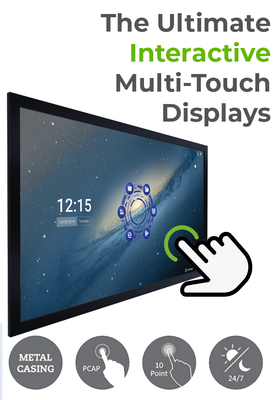
For larger indoor displays, especially 65 inch and above, budgets usually move into the higher hundreds or several thousand pounds depending on specification. Touchscreen displays and interactive panels cost more because they add touch technology, tougher glass, more advanced processing and, in some cases, collaboration features for meeting rooms or education settings.
High-brightness shopfront screens typically command a stronger premium than standard indoor models. These are built to cut through ambient light and support customer-facing messaging in challenging positions. Outdoor digital signage is a different level again, as weatherproofing, temperature control, vandal resistance and enclosure design all add cost.
Video wall pricing can look attractive on a per-panel basis at first, but total project costs rise once mounts, processors, cabling, installation and content management are factored in. The same applies to freestanding digital totems and kiosks, where enclosure build, integrated players, touch capability and branding options influence the final figure.
Why commercial screens cost more than consumer TVs
This is where procurement teams sometimes need to reset the comparison. A consumer TV may appear far cheaper than a commercial signage display of the same size, but the specification is not equivalent. Commercial displays are designed for longer operating hours, better thermal performance, landscape or portrait orientation, central control, signage connectivity and warranty support aligned to business use.
You are also paying for consistency across an estate. If you need ten, fifty or one hundred screens to behave the same way across multiple sites, commercial hardware is far easier to standardise, mount and manage. That has direct value for IT teams, facilities teams and installers.
There is a branding issue too. Customer-facing environments need panels that stay bright, sharp and reliable. A failed screen in a reception, restaurant or retail frontage is not just an equipment issue. It reflects on the business.
The hidden costs behind the screen price
The quoted screen cost is only one part of the budget. Media players, CMS software, mounts, cabling, network setup and installation can all materially change the real project total. For straightforward single-screen deployments, those costs may be modest. For multi-site signage networks, they are central to the buying decision.
Software is often overlooked at the start. Some displays include system-on-chip capability and can run signage applications without an external player. That can reduce hardware spend and simplify deployment. In other cases, a dedicated media player gives better flexibility, stronger performance or easier remote management. Neither route is always right. It depends on content complexity, update frequency and how much control the business needs.
Installation is another area where costs vary for good reason. A wall-mounted display in an office meeting room is one thing. A suspended double-sided display in a retail environment, or an outdoor screen requiring groundwork and power planning, is another. Buyers who plan installation from day one usually avoid the cost of design changes and site delays later.
How to budget by application, not just by screen
A reception display usually needs a clean commercial panel, dependable playback and tidy installation. It may not need extreme brightness or touchscreen capability. That keeps the digital signage display price more controlled, provided the display is sized correctly for the viewing distance.
A digital menu board system needs brightness, strong readability and a reliable way to update content. Restaurants and quick service operators often benefit from standardised screen sizes and mounting layouts across sites, even if that means paying slightly more per screen to simplify future rollout.
Retail window displays need brightness first. This is not the category to under-specify. If direct sunlight or strong ambient light is part of the environment, budget for a proper high-brightness commercial solution from the outset.
In education and corporate settings, interactive displays may replace projectors or support collaboration. Here the budget should reflect writing performance, connectivity, software compatibility and support, not just screen size. A cheaper unit that frustrates staff or students quickly loses its value.
When lower price makes sense and when it does not
There are cases where keeping costs down is sensible. Internal messaging screens in back-of-house areas, simple office noticeboards or short-hours applications may not require premium brightness or 24/7 ratings. A standard commercial signage display can be more than adequate.
But lower price stops making sense when failure creates disruption, when visibility is business critical, or when the screen is hard to access for maintenance. For example, a display mounted high in a public area or built into a bespoke fixture should be specified for reliability first. Labour and downtime can outweigh any initial saving.
This is also why product range matters. Businesses often need a mix of solutions across one estate - standard displays in offices, menu boards in hospitality, high-brightness screens in windows and interactive screens in meeting spaces. Buying each category on the right specification avoids overspending in one area and underbuying in another.
Getting better value from your signage budget
The best value usually comes from matching the display to the environment and the content plan. Over-specifying every screen is wasteful, but under-specifying key screens is worse. A practical review should cover screen size, brightness, operating hours, orientation, content source, mounting method and how updates will be managed.
For larger rollouts, standardisation can improve value significantly. Using a consistent platform across sites helps with maintenance, spares, staff training and software deployment. Trade buyers and multi-site operators often benefit from working with one specialist supplier that can source hardware, advise on compatibility and support installation planning.
That is especially relevant when lead times matter. A cheaper screen that is unavailable, unsupported or unsuitable for commercial use can slow down an opening programme or refurbishment schedule. For many UK buyers, fast fulfilment and access to technical support are part of the value equation, not extras.
A sensible budget for digital signage should therefore look beyond list price. It should reflect how the screen will perform in the real environment, how long it is expected to operate, and what it costs to keep the network running properly. If you start with those questions, the digital signage display price becomes easier to judge - and far easier to justify to stakeholders who care about whole-life cost rather than just the invoice total.
If you are pricing a project now, the strongest position is to define the use case first and let the hardware follow. That is usually where better performance, fewer support issues and a more defendable budget all meet.