


 Commercial display screen sizes should be chosen around viewing distance, content type and the environment they are installed in.
Choosing the wrong commercial display screen size is one of the easiest ways to reduce the impact of a digital signage project before it even begins.
Too small, and your content becomes difficult to read. Too large, and the display can overwhelm the space, create viewing issues or waste budget. The right screen size should feel natural within the environment while remaining clear, visible and commercially effective.
Whether you are planning a retail digital signage installation, upgrading meeting rooms, adding screens to a gym or building a larger AV display network, screen size directly affects visibility, engagement and return on investment.
This guide breaks down the most popular commercial display screens, where each size works best and how to choose the right display for your space.
Why Commercial Display Screen Size Matters
Commercial display technology is not just about image quality. Screen size affects how people see, read, understand and respond to the content on screen.
A 32-inch screen may work perfectly behind a reception desk, but it would be too small for a busy retail window. A 98-inch display may transform a boardroom or auditorium, but it would feel excessive in a compact café or small meeting room.
At ScreenMoove, the goal is not simply to choose the biggest screen possible. The goal is to choose the right screen size for the audience, content, space and viewing distance.
The key rule: the further away people are from the screen, the larger the commercial display usually needs to be.
Commercial Display Screen Size Comparison
 A side-by-side commercial display size comparison helps businesses understand scale before choosing a screen.
| Screen Size | Best For | Typical Environments |
|---|---|---|
| 24"-32" | Close-range information and compact signage | Reception desks, POS areas, kiosks, check-in points |
| 43" | Small to medium digital signage | Retail, healthcare, offices, wayfinding, hospitality |
| 50" | Mid-sized commercial signage | Gyms, retail stores, restaurants, showrooms |
| 55" | Most versatile commercial display size | Retail, offices, gyms, hospitality, education |
| 65" | Large meeting rooms and interactive spaces | Classrooms, boardrooms, collaboration spaces |
| 75"-98" | High-impact communication | Auditoriums, large boardrooms, universities, event spaces |
| Video Walls | Large-format visual impact | Flagship retail, receptions, events, control rooms |
Browse commercial-grade displays for professional signage, meeting rooms, retail, gyms and business environments.
Shop commercial displays32-Inch Commercial Displays
Best for reception desks, POS areas and compact information points

32-inch commercial displays are compact, flexible and useful for close-range communication. They work best when viewers are standing or sitting near the screen.
Common use cases include reception displays, customer check-in screens, small digital menu boards, meeting room schedulers, product displays and information points.
For cafés, salons, clinics, gyms and offices, a 32-inch display can create a professional digital upgrade without dominating the space.
Use smaller commercial monitors and compact signage displays for close-range business communication.
Browse compact commercial displays43-Inch Commercial Displays
Best for retail signage, corporate spaces and wayfinding
 43-inch displays are a strong option for retail signage, wayfinding and medium-range commercial communication.
43-inch commercial displays are one of the most practical sizes for businesses because they offer a strong balance between visibility, cost and installation flexibility.
They are commonly used for retail promotional signage, waiting room displays, hospitality signage, wayfinding systems, office communication and compact digital signage networks.
For businesses installing multiple displays across a site, 43-inch screens are often a sensible choice because they provide noticeable visual impact without requiring large wall space.
The Samsung QM43C is a 43-inch 4K commercial display suitable for professional signage and business environments.
View Samsung QM43C 43-inch commercial display50-Inch Commercial Displays
Best for mid-sized commercial spaces

50-inch commercial displays sit in the sweet spot for many businesses. They are large enough to attract attention, but still compact enough for most retail, gym and hospitality environments.
This screen size works especially well for portrait digital signage, product promotion, gym class information, restaurant messaging and showroom displays.
For high-footfall spaces, 50-inch displays can give businesses more visual presence than smaller signage without moving into large-format display territory.
For gyms, retail and commercial spaces, 50-inch displays often work well within digital signage networks.
Shop digital signage displays55-Inch Commercial Displays
The most versatile commercial display size
 55-inch commercial displays are one of the most versatile choices for retail, offices, gyms and hospitality.
If there is one screen size that dominates commercial AV, it is 55 inches.
55-inch commercial displays are large enough to deliver strong visual impact, but still practical enough for most wall-mounted signage and meeting room installations.
They work well across retail environments, corporate offices, gyms, hospitality venues, healthcare waiting areas and education spaces.
For many businesses starting a digital signage project, a 55-inch commercial display is often the best first choice because it offers strong readability, flexible installation and commercial value.
The Samsung QM55C is a 55-inch 4K commercial display suitable for signage, presentations and professional business environments.
View Samsung QM55C 55-inch commercial display65-Inch Commercial and Interactive Displays
Best for classrooms, collaboration spaces and larger meeting rooms

65-inch displays create noticeably more impact than 55-inch screens. They are especially useful in spaces where people need to view content from further away or interact with the display directly.
This size is commonly used for conference rooms, classrooms, training rooms, interactive presentations and retail feature walls.
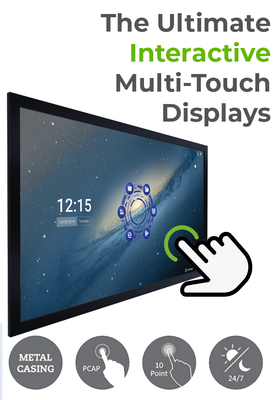
65-inch interactive displays are particularly popular in education and corporate collaboration environments because they combine visibility, touch interaction and presentation functionality.
Choose 65-inch commercial displays for larger rooms, or interactive displays where collaboration and touch functionality are required.
View Samsung QM65C 65-inch commercial displayBrowse interactive displays
75-Inch Commercial Displays
Best for boardrooms, presentation spaces and larger venues

75-inch commercial displays are designed for spaces where impact and readability matter. They are commonly used in executive boardrooms, training spaces, universities, event rooms and larger corporate environments.
This size gives presenters more space for dashboards, video calls, presentations and shared content. It also helps make the room feel more premium and professionally equipped.
When choosing a 75-inch screen, businesses should consider wall strength, mounting height, room layout and viewing distance carefully.
For larger rooms and collaboration spaces, explore commercial displays and meeting room display solutions.
Browse large commercial displays98-Inch Large Format Commercial Displays
Best for high-impact communication
 98-inch large format displays are designed for big rooms, high-impact presentations and premium environments.
98-inch commercial displays are built for environments where scale matters. They can be used in auditoriums, universities, event spaces, large meeting rooms, flagship retail spaces and public sector environments.
At this size, a commercial display becomes a central feature of the room. It can support presentations, digital signage, brand content, data dashboards and large-scale visual communication.
Because of the size, professional planning is essential. Installation, power, mounting, content scaling and viewing angles all need to be considered properly.
For very large spaces, compare large-format commercial displays with video wall displays to find the right solution.
Explore video wall displaysPortrait Digital Signage Displays
Best for retail, wayfinding and vertical content
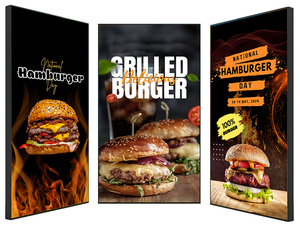
 Portrait digital signage is especially useful for retail stores, wayfinding, shopping centres and promotional content.
Portrait digital signage is increasingly popular in retail, hospitality, shopping centres, corporate buildings and public spaces.
Vertical displays feel natural for promotional content, wayfinding, product messaging and entrance signage. They can also be easier to position in narrow spaces where landscape displays would not fit as well.
If you are planning a portrait installation, always choose a commercial display that supports portrait orientation. Consumer TVs are not usually designed for this type of professional installation.
Portrait signage is ideal for retail, reception and wayfinding. Choose commercial-grade digital signage displays designed for professional use.
Browse digital signage displaysCommercial Displays vs Consumer TVs
One of the biggest mistakes businesses make is using a consumer television instead of a commercial display.
Commercial displays are designed for business environments. They typically offer better durability, stronger brightness options, professional mounting support, signage functionality and warranties suited to commercial use.
Consumer TVs may look cheaper at first, but they are not designed for continuous operation, portrait mounting, public display environments or commercial digital signage networks.
For digital signage, meeting rooms, retail displays, gyms, education and hospitality, a commercial-grade display is the better long-term investment.
How to Choose the Right Commercial Display Size
Before choosing a screen, think about how the display will actually be used.
1. How far away will people view it?
Longer viewing distances usually require larger screens. A reception display viewed from one metre away does not need the same scale as a retail display seen from across a shopping centre.
2. What type of content will you show?
Text-heavy content needs more space. Menus, timetables, pricing, wayfinding and dashboards usually need larger or clearer displays than abstract brand visuals.
3. Is the space bright?
Large windows, daylight and high ambient light can affect screen visibility. In bright environments, high-brightness displays are often the better choice.
Retail windows and high-light environments often need ultra high-brightness digital signage displays.
Shop High Brightness Displays4. Will it be landscape or portrait?
Landscape displays work well for presentations, meeting rooms and wide-format signage. Portrait displays work well for retail, directories, wayfinding and promotional signage.
Best Commercial Display Sizes by Industry
Different industries use commercial display sizes in different ways. A gym may need screens for class schedules and motivational content, while a retail store may need portrait signage, window displays and promotional screens.
Need help choosing the right screen size?
ScreenMoove can help you compare commercial display sizes, choose the right screen for your space and avoid costly sizing mistakes.
Shop Commercial DisplaysFinal Thoughts
The best commercial display screen size is not always the biggest. It is the size that works best for your environment, your audience and your content.
From compact 32-inch reception displays to 98-inch large-format screens, choosing the right size has a direct impact on visibility, usability and commercial performance.
If you are planning a digital signage project, upgrading meeting rooms or exploring interactive display solutions, ScreenMoove can help you choose the right display for your space.
Frequently Asked Questions
What is the most popular commercial display size?
55-inch commercial displays are one of the most popular choices because they work well across retail, offices, gyms, hospitality and education environments.
What screen size is best for digital signage?
The best digital signage screen size depends on viewing distance and environment. Most businesses choose between 43-inch and 65-inch commercial displays.
Are commercial displays better than TVs?
Yes. Commercial displays are designed for business use, longer operating hours, professional installation, higher brightness options and digital signage applications.
What size display is best for meeting rooms?
Small meeting rooms typically use 43-inch to 55-inch displays, medium rooms often use 65-inch displays, and larger boardrooms may need 75-inch to 98-inch screens.
Can commercial displays be used in portrait orientation?
Yes. Many commercial displays support portrait installation, making them suitable for retail signage, wayfinding, shopping centres and vertical digital signage content.
Speak to ScreenMoove about your display project
Get expert advice on commercial displays, digital signage, interactive screens, video walls and AV solutions. Call 020 8191 9223 or send us a message below.
Call ScreenMoove on 020 8191 9223 to discuss the best commercial display screen size for your space.


