


What this guide covers
- How to compare commercial display hardware properly
- What makes a screen suitable for indoor, window-facing or outdoor use
- When to choose a digital signage player, integrated CMS or cloud-based platform
- The pros and cons of wall mounts, totems, suspended installations and video walls
- How to make better buying decisions with long-term performance in mind
Start with the display type, not just the size
One of the most common mistakes in digital signage planning is starting with dimensions alone. Screen size matters, but it should never be the only decision point. A better approach is to first define the display type that suits the environment and purpose. From there, you can narrow down size, brightness, orientation, mounting and software compatibility.
For most commercial applications, the starting point is a large format display. These professional screens are built for longer operating hours, higher reliability and stronger image performance than consumer televisions. They are also better suited to remote management, commercial mounting and integration with a digital signage platform or multi screen CMS.
A good commercial screen selection process usually looks at:
- Brightness - especially for strong ambient light or window-facing positions
- Operating time - such as 16/7 or 24/7 commercial use
- Orientation - landscape, portrait or double-sided applications
- Connectivity - HDMI, LAN, Wi-Fi, USB and CMS compatibility
- Integrated media player - whether a separate digital signage player is needed
- Physical installation - wall mount, totem, suspended or outdoor enclosure

When interactive screens make more sense
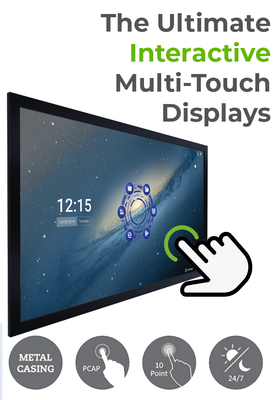
Standard displays are ideal for one-way messaging, but there are situations where interactive touchscreen digital screens offer a clear advantage. These are often used when users need to browse information, navigate content or take control of the experience themselves. A freestanding interactive display can also create a more premium and purposeful visual presence in reception zones, showrooms and public-facing spaces.
If you are considering interactive hardware, the most important questions are not just about touch capability. You also need to think about durability, ease of cleaning, software compatibility, portrait usability and whether the content was actually designed for touch. A touchscreen only adds value if the interface is intuitive and the software behind it is stable. It is also worth linking your display choice back to digital signage content strategy, because interactive experiences rely heavily on thoughtful user journeys and clean content design.
Choosing the right software and CMS matters as much as the screen
Hardware gets most of the attention, but the real operational value often comes from the software layer. A high-quality screen paired with poor software becomes difficult to update, inconsistent across locations and harder to scale. A strong digital signage software UK solution should make content scheduling, remote management and multi-screen control easy.
Businesses rolling out more than one screen should usually consider a multi screen CMS or multi location signage software platform. These systems allow content to be managed centrally while still giving users the flexibility to tailor messaging by location, screen group, daypart or campaign type.
When comparing platforms, look at:
- Ease of scheduling and publishing
- Cloud access and remote updates
- User permissions and approval workflows
- Support for portrait, landscape and video wall layouts
- Media types supported, including HTML, images and video
- Proof of playback, monitoring and device status reporting
In some cases, a commercial display with integrated Android or built-in media playback can reduce the need for an external digital signage player UK. In other cases, using a dedicated player still makes sense, especially where more complex software, specific security requirements or advanced layout control is needed. To understand how the full system works together, read the digital signage hardware explained guide.
You can also measure performance using the digital signage ROI calculator.
Do not overlook the mounting method
The same screen can perform very differently depending on how it is installed. Mounting affects visibility, safety, cable management, perceived quality and even content design. This is why a good commercial display buying guide always includes installation planning, not just hardware comparison.
A digital signage wall mount is still one of the most common and cost-effective options. It creates a clean, low-profile result, works well in both landscape and portrait layouts and is ideal where the display is intended to sit neatly against an architectural surface. However, the mount needs to be chosen with weight, VESA pattern, service access and cable routes in mind.
Freestanding units create a different effect. A totem or kiosk format can improve visibility and allow installation in spaces where wall fixing is not practical or desirable. Suspended and rod-mounted formats are often chosen where visibility from further away is important or where the display needs to sit directly in a glazed frontage. For a deeper breakdown, see the hardware guide here.


Window-facing and outdoor digital displays require a different specification
Not every bright environment needs the same solution. A screen placed behind glass is different from a true exterior installation, and both differ significantly from a standard indoor display. This is where many projects fall short, because a screen that looks good in a showroom can become washed out or unreliable in real-world daylight conditions.
A window-facing digital signage display generally needs significantly higher brightness than a standard indoor unit, especially if it must remain visible in direct sunlight. Positioning, reflections, glazing and the angle of view all affect performance, so the right choice is about context, not just the brightness figure on a specification sheet.
A true outdoor digital display goes further. Here, the screen or enclosure needs to protect against weather, moisture, dust and changing temperatures. This is where you start looking at terms such as IP rated outdoor screens and IP65 digital signage. If the application is external, weather resistance, thermal control, vandal resistance and maintenance access all become part of the buying decision.
In short:
- Indoor screen - best for controlled lighting conditions
- Window-facing screen - built for stronger ambient light and visibility through glass
- Outdoor screen - designed for full exposure, weather protection and long-term durability
Choosing the right display also impacts long-term performance. You can evaluate this using the digital signage ROI calculator.
When a commercial video wall is the better option
There are situations where a single screen, no matter how large, simply does not create enough impact. A commercial video wall is designed for those moments when scale, presence and visual immersion matter. Using multiple ultra-thin bezel displays, video walls create a much larger canvas while maintaining crisp detail and a high-end look.
Video walls are particularly useful where there is a need to:
- Create a striking architectural focal point
- Deliver large-scale dynamic content
- Present branded visuals with more depth and scale
- Use the wall itself as a core feature of the environment
The key is making sure the content suits the format. A video wall should not just be treated as a bigger screen. Layout design, resolution planning, bezel compensation and playback method all matter. This is why the software and content workflow need to be considered alongside the hardware from the beginning. Content planning is also critical. See digital signage content strategy.

How to make a better long-term buying decision
The most cost-effective solution is not always the cheapest screen. The right setup is the one that remains reliable, manageable and visually effective over time. Before buying, it helps to think beyond the initial specification and ask what the system will actually need to do six or twelve months later.
Consider the full ownership picture:
- Will content be updated by one person or several teams?
- Do you need a platform that can scale across additional screens later?
- Will the display run for long hours every day?
- Does the installation need to withstand daylight, weather or public interaction?
- Will the screen need a separate player, or is an integrated solution enough?
- How easy will servicing, replacement or remote troubleshooting be?
Asking these questions early helps avoid over-specifying in the wrong areas and under-specifying in the ones that matter most. A strong commercial display project is usually the result of better planning rather than simply bigger hardware. Helpful next steps include reading the hardware guide and using the ROI guide.
Final thoughts
A successful digital signage setup depends on choosing the right combination of display type, mounting, software and environmental suitability. Whether you are comparing a large format display, exploring interactive touchscreen digital screens, reviewing digital signage wall mount options or planning a commercial video wall, the best results come from looking at the entire system rather than any one component in isolation.
If you are still deciding between standard commercial screens, window-facing displays, outdoor options, integrated players or cloud-based signage platforms, a practical specification review can save time, reduce errors and improve long-term value. You can also explore hardware guidance and ROI guidance for further insight.