
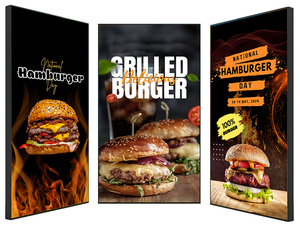


Whether you are planning a single shop window display, a restaurant menu board, a school information screen or a multi-site rollout, understanding the hardware behind digital signage can save time, reduce installation issues and improve long-term performance. A professional digital signage setup usually includes three core components - the screen, the player and software setup, and the mounting solution.
Each plays a different role. The display is what your audience sees. The player and software control the content and schedule. The mount determines how the screen is positioned, secured and presented in the space. Get these elements right and you have the foundations of a signage system that looks better, lasts longer and is easier to manage.
In this guide
We explain the different types of commercial display screens, when to use external or built-in media players, why digital signage software matters, how freestanding and wall-mounted solutions differ, and how to choose the right setup for retail, hospitality, offices, healthcare and education.
What is digital signage hardware?
Digital signage hardware refers to the physical equipment used to display and manage content on digital screens. Depending on the project, that may include a commercial display, an external media player, mounting hardware, touch technology, cables, accessories and the supporting software that tells the screen what to show.
In simple terms, digital signage hardware is the part you install, mount and connect. It is what turns a content idea into a working display solution in the real world. Without the right hardware, even good content and good software will struggle to deliver the performance, brightness, visibility and reliability you need.
- Commercial display screens for indoor, window-facing or specialist use
- Media players for content playback and system control
- Digital signage software for scheduling, updating and managing content
- Mounts, stands and brackets for safe, professional installation
- Optional extras such as touch overlays, sensors, enclosures and accessories
New to signage? Our guide to what digital signage is explains how the wider system works and where it fits into business communication and advertising.
Reliable
Commercial hardware is designed for longer run times, better thermal performance and stronger day-to-day dependability.
Powerful
The right player and software setup give you smoother playback, better content control and easier remote updates.
Flexible
From wall-mounted screens to freestanding digital signage displays, the hardware can be tailored to the environment.

1. Commercial display screens - the foundation of your setup
The screen is usually the first thing people think of when planning digital signage. It is also one of the most important buying decisions. Commercial displays are built for longer operating hours, better heat management and more reliable performance than standard consumer TVs. That matters in spaces where screens may be running for 12, 16 or even 24 hours a day.
Commercial displays vs consumer TVs
Consumer TVs can sometimes work in occasional-use environments, but they are not designed for the demands of business signage. Commercial displays are made for professional use. They generally offer higher brightness, longer panel life, stronger durability and better compatibility with signage hardware and software.
For businesses comparing options, browse our commercial display screens collection for in-stock signage-ready screens.
Brightness matters more than many buyers expect
Brightness is measured in cd/m² and has a major impact on how visible your content is. For a standard indoor space, 350 to 500 cd/m² may be enough. For brighter interiors, glass-heavy environments or window-facing installations, higher brightness becomes critical.
- 350-500 cd/m² - suitable for many standard indoor environments
- 700 cd/m²+ - better for brighter interiors and stronger ambient light
- 1500-4000 cd/m²+ - ideal for shop windows and sunlight-facing positions
For daylight-facing applications, explore our high brightness digital signage displays.
Screen size and resolution
The right screen size depends on viewing distance, content type and physical space. A 32 inch display may work well for local promotions, room booking or menu content. Larger 55 inch, 75 inch and 98 inch screens are better for impact-led messaging, shared information, advertising and wayfinding.
Resolution matters too. Most commercial signage screens now offer Full HD or 4K. If your content includes detailed visuals, product imagery, dashboards, multi-zone layouts or video content, 4K gives you more clarity and flexibility.
Interactive displays and touch-enabled screens
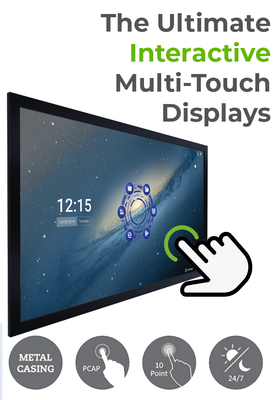
Not every digital signage project is passive. In education, retail, corporate and visitor-facing spaces, interactive hardware can improve engagement and usability. Touch-enabled screens are often used for self-service kiosks, product browsing, directories, wayfinding, collaborative presentations and customer interaction.
Browse our interactive displays if your project needs a more hands-on user experience.
2. Media players and digital signage software
The media player is what tells the display what to show and when. Think of it as the playback engine behind your screen. Some commercial displays have built-in system-on-chip functionality, while others use an external media player connected via HDMI or other supported inputs.
Alongside the player, the software layer controls scheduling, remote updates, screen groups, layouts and content publishing. Hardware and software need to work together. A strong setup is not only about screen quality - it is about how easy the system is to update, manage and scale.
Built-in signage players
Many modern commercial displays include built-in signage functionality. This can reduce the amount of extra hardware needed and create a cleaner installation. Built-in solutions often work well for single-screen installs, basic promo loops, simple menu boards and smaller deployments.
They can be ideal when you want:
- A tidier install with fewer visible components
- Lower hardware complexity
- Simple content loops and basic scheduling
- A cost-effective setup for straightforward environments
However, built-in systems may have limitations around compatibility, processing power or advanced content requirements.
External Android and Windows players
External media players are often used when more flexibility or performance is needed. Android players can be compact, affordable and easy to deploy, making them popular for retail, hospitality and menu board environments. Windows-based players are often chosen for more advanced projects that require more power, more integration flexibility or more demanding content playback.
External players can be a better fit when you need:
- Advanced content scheduling and layouts
- Better compatibility with third-party systems
- Multi-screen or network-based deployments
- Data-driven content, dashboards or more complex visual output
Explore our digital signage players for dedicated playback hardware.
Why digital signage software matters
Software is what turns a display into a managed communications tool. Good digital signage software lets you schedule content by day, time or location, update screens remotely, control multiple displays from one place and keep campaigns fresh without needing to be on site.
For many businesses, the software is the piece that makes the whole system worthwhile. It gives marketing teams, operations teams and site managers the ability to react quickly, manage content centrally and maintain consistency across one location or many.
See our digital signage software for a dedicated solution that works alongside your hardware.
3. Mounting solutions - the part that affects both safety and finish
Mounting can be overlooked, but it has a major impact on the final result. The right mount affects viewing angle, aesthetics, accessibility, cable management and safety. It also changes how premium and tidy the installation feels once complete.
Wall mounts
Wall mounts are one of the most common options for digital signage. They work well in retail stores, hospitality spaces, offices, waiting areas and schools. Depending on the screen size and location, you may choose a fixed, tilt or articulated mount.
Wall mounting is ideal when you want:
- A clean, professional finish
- Secure screen positioning
- Consistent viewing angles
- Neater cable routing and a more built-in look
Ceiling-mounted displays
Ceiling mounts are useful where wall space is limited or where you need to suspend signage in a high-footfall area. This can work well in larger retail stores, transport environments, open receptions and directional signage applications.
Freestanding digital signage displays
Freestanding solutions are ideal where flexibility matters. They work well for events, temporary campaigns, retail entrances, showrooms, exhibition spaces and any location where wall mounting is not practical or desirable.
Browse our freestanding digital signage displays for floor-standing, high-impact display options.
Video wall systems
Larger-format environments may need video wall hardware and specialist mounting systems that keep each panel aligned, supported and serviceable. Precision matters here, especially when creating seamless visual layouts for lobbies, control rooms, retail feature walls and branded spaces.
Explore our video wall displays for larger visual installations.
Choosing the right digital signage hardware for your space
The best setup depends on where the screen is going, how long it will run, what content it will show and whether users need to interact with it. A restaurant menu board and a retail window display may both be digital signage, but they usually need very different combinations of brightness, software, player and mounting approach.
Retail
Retail projects often need strong brightness, clear visibility and tidy installations. Window displays may require high brightness screens and compact player setups.
Explore retail digital signageRestaurants and cafés
Menu boards need commercial displays, easy content updates and reliable playback for changing menus, promotions and day-part messaging.
View digital menu boardsOffices and meeting spaces
Reception screens, internal comms displays and collaboration areas often benefit from interactive screens and centrally managed software.
Shop interactive displaysEducation and public-facing environments
Schools, colleges and visitor spaces may need touch capability, durable hardware and content management across multiple locations.
See education display solutionsCommon hardware mistakes to avoid
A good signage project is not only about buying a screen. It is about choosing hardware that works reliably in the actual environment. Some of the most common mistakes include:
- Using a consumer TV where a commercial display is needed
- Underestimating the brightness needed for glass-heavy or sunlit spaces
- Choosing a player that does not support the chosen software properly
- Ignoring cable management and mounting finish
- Buying hardware with no thought for future scaling or content control
The content strategy matters too. Even the best hardware needs the right messages and schedule behind it. Read our digital signage content strategy guide for the content side of the setup.

Why businesses choose ScreenMoove
At ScreenMoove, we help businesses across the UK choose digital signage hardware that fits the application, not just the spec sheet. Whether you need a single display, a network of menu boards, a high brightness shop window setup or a larger rollout across multiple sites, we can help you match the right combination of screen, player, software and mount to the space.
Our product range covers commercial displays, high brightness signage, interactive screens, dedicated players, digital signage software, freestanding digital signage displays and more - all backed by practical advice from a team that understands real-world installations.
Need help choosing the right digital signage hardware?
Speak to ScreenMoove for advice on commercial display screens, media players, digital signage software, mounts and complete digital signage solutions across the UK.
Call: 020 8191 9223
Frequently asked questions
What hardware do I need for digital signage?
You usually need a commercial display screen, a media player or built-in playback solution, digital signage software, and a suitable mounting system. Some projects may also need touch capability, enclosures or extra accessories.
Can I use a normal TV for digital signage?
You can in some low-demand situations, but commercial display screens are the better option for business use because they are designed for longer operating hours, stronger brightness and greater reliability.
Do I always need a separate media player?
Not always. Many commercial displays include built-in signage functionality. A separate player is often better when you need more power, more flexibility or better compatibility with advanced content and software.
Why is digital signage software important?
Digital signage software lets you update content remotely, schedule campaigns, manage multiple screens, keep messaging consistent and make changes without needing to be physically on site.
When should I use freestanding digital signage displays?
Freestanding digital signage displays are ideal for entrances, retail promotions, events, exhibitions and spaces where wall mounting is not practical or where you want a more flexible setup.


