



 A successful meeting room combines the right display, camera, microphones, speakers, connectivity and room layout rather than treating each component in isolation.
What This Meeting Room AV Guide Covers
This guide is for office managers, IT leads, facilities teams and business owners specifying a new room or upgrading an unreliable setup.
- What counts as meeting room AV?
- Choosing the right meeting room display
- Video conferencing equipment for hybrid meetings
- Meeting room microphones and audio
- Mounting, cabling and physical setup
- Commercial display vs consumer TV
- How much meeting room AV costs
- DIY vs professional installation
- Frequently asked questions
Introduction: Good Meeting Room AV Should Feel Invisible
Bad meeting room technology announces itself immediately. A call begins with somebody searching for the right cable. The remote attendees sound distant. The camera frames half the room. Small spreadsheet text is unreadable from the back of the table, and the first ten minutes are spent trying to make the system work.
Good meeting room AV does the opposite. People enter, connect and begin. Content is clear from every seat, voices are intelligible at both ends of the call, the camera gives remote participants a useful view of the room and the controls behave consistently.
Achieving that result is not simply a matter of buying the biggest screen or the most expensive conferencing bar. The system needs to match the room size, table layout, platform, working habits and installation environment. This is why businesses benefit from planning the complete room rather than buying isolated products.
ScreenMoove supplies meeting room displays and conference room solutions for huddle spaces, standard meeting rooms, training areas and executive boardrooms across the UK. The sections below explain how to build a practical specification before requesting a quote.
What Counts as Meeting Room AV?
Meeting room AV is the collection of visual, audio, conferencing and control equipment used to support in-room presentations and communication with remote participants. In a simple room, this may be a commercial display, a USB video bar and a cable for a visitor's laptop. In a larger conference room, it can include multiple displays, ceiling microphones, distributed speakers, touch control panels, room scheduling and structured cabling.
A commercial screen, interactive touchscreen, projector or video wall used for shared content and remote participants.
A camera or all-in-one video bar that frames the room and sends a clear image to people joining remotely.
Microphones, speakers, soundbars or conferencing bars that capture speech and reproduce remote voices clearly.
USB-C, HDMI, wireless presentation, touch controllers, room systems and network connections that make the room usable.
The right meeting room technology depends on what the space must do. A four-person huddle room used mainly for Teams calls needs a different conference room AV setup from a divisible training room, a client presentation suite or an executive boardroom.
Start by defining the common meeting types, the platforms your organisation uses, the number of local and remote participants and whether visitors need to connect their own laptops. This prevents the specification from becoming a collection of impressive products that do not work together.
Choosing the Right Display for Your Meeting Room
The display is the most visible part of a meeting room AV system, but size alone does not determine whether it is suitable. Resolution, brightness, viewing angle, operating hours, mounting height, room depth and the type of content all affect the decision.
Screen size should follow viewing distance and content
The people furthest from the screen must be able to read the smallest content that will regularly appear. A slide deck with large headlines is forgiving. Spreadsheets, technical drawings, dashboards and detailed documents demand a larger image and careful placement.
For a compact room, a single commercial display may be enough. A medium meeting room often benefits from a larger 4K display such as one of ScreenMoove's 55 inch commercial displays, provided the screen remains proportionate to the room. Larger boardrooms may need a 75-inch, 86-inch or 98-inch display, dual screens or a video wall so both shared content and remote participants remain visible.
Mounting height matters too. A screen placed too high can cause discomfort during long sessions, while a screen placed too low may be blocked by people, laptops or furniture. The centre of the display should align naturally with the seated audience's sightlines and the camera position.
Interactive touchscreen or standard commercial display?
A standard commercial display is often the best choice when the room is used mainly for presenting, screen sharing and video calls. It provides a dependable image without adding touch functionality that may rarely be used.
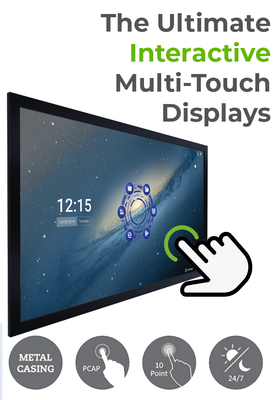
An interactive display makes more sense when teams regularly annotate documents, run workshops, brainstorm on a digital whiteboard, teach, train or collaborate directly at the screen. ScreenMoove's interactive displays for conference rooms combine a large-format touchscreen with collaboration features suited to active meetings.
Do not choose touch simply because it sounds more advanced. Consider whether people will physically approach the display, whether the room layout allows it and whether the preferred conferencing or whiteboard software supports the required workflow.

The display, camera and room layout should be considered together so remote participants can see the room while local users retain a clear view of shared content.
Video Conferencing Equipment for Hybrid Meetings
Hybrid meetings raise the standard required from meeting room AV equipment. Local participants can usually compensate for poor room design, but remote participants cannot. If the image is badly framed or the audio is unclear, people joining online become observers rather than equal contributors.
A camera should provide a useful view of the table without making participants appear too distant. Compact rooms can often use an all-in-one conferencing bar mounted above or below the display. Larger rooms may need optical zoom, intelligent framing, presenter tracking or multiple cameras to cover the space properly.
ScreenMoove's range of video conferencing equipment includes cameras, USB bars and integrated solutions for different room sizes. The best choice depends on room depth, seating position, platform and whether the system must operate from a dedicated room controller or a user's laptop.
Native room system or bring-your-own-meeting?
A native room system gives the space a dedicated interface for platforms such as Microsoft Teams. Users can walk in, select a scheduled meeting and join without connecting a laptop. Microsoft Teams Rooms systems are particularly useful where standardisation, central management and consistent user experience matter.
A BYOD or BYOM room lets the user run the call from their own laptop and connect it to the room's camera, microphones, speakers and display. This is flexible for visitors and mixed-platform organisations, but the connection method must be obvious and reliable.
The deeper choice is covered in ScreenMoove's guide to BYOD vs native room systems. Many businesses use both approaches across their estate: dedicated Teams Rooms in frequently used spaces and simpler USB connectivity in smaller rooms.
Native room system
- Consistent one-touch joining
- Dedicated controller and room account
- Useful for managed corporate estates
- Less dependent on individual laptops
BYOD or BYOM
- Users run meetings from their own device
- Flexible across different platforms
- Ideal for visitors and mixed environments
- Requires simple, clearly labelled connectivity
Audio: The Most Overlooked Part of Meeting Room AV
Display quality is easy to demonstrate, so it often receives most of the attention during procurement. Audio is less visible, yet it usually determines whether a hybrid meeting feels effortless or exhausting.
Remote participants need to hear every person in the room without excessive echo, sudden changes in volume or background noise. Local participants also need clear reproduction of remote voices without feedback. The microphone therefore needs suitable coverage for the table shape and room acoustics, while the speakers need to distribute sound evenly.
Conferencing bars and tabletop speakerphones
In small rooms, an all-in-one video bar or tabletop speakerphone may provide enough microphone and speaker coverage. These solutions reduce cabling and make deployment straightforward. Their effective coverage still depends on distance, room materials and whether people face the device naturally.
Ceiling microphones and distributed audio
Ceiling microphones can create a cleaner table and improve coverage in larger spaces, especially when paired with ceiling speakers or a dedicated audio processor. They require more planning and installation than a USB bar, but they can produce a more professional boardroom experience.
Browse ScreenMoove's conference room microphones when the built-in audio of a display or conferencing bar is not sufficient for the room.

Ceiling microphones can improve room coverage and remove tabletop clutter, but placement and acoustic design need to be considered before installation.
Mounting, Cabling and the Physical Conference Room AV Setup
A strong product specification can still deliver a poor result if the physical installation is treated as an afterthought. Screen position, camera height, cable routes, power, network access and furniture all affect how naturally the room works.
Wall mount, trolley or alternative installation?
A fixed wall installation creates a clean, permanent finish and is appropriate for most dedicated meeting rooms. The bracket must support the display weight and provide the correct level of tilt, reach or service access. ScreenMoove supplies commercial wall mount brackets for different display sizes and installation requirements.
A mobile trolley is useful in flexible offices, training environments or rooms that change layout. It also avoids drilling into unsuitable walls, although power and data cables still need to be managed safely.
Cable management and connectivity
Plan where laptops will sit, how users will connect and where power supplies, extenders and room computers will be housed. Long cable runs may need active USB or HDMI extension rather than standard leads. Wireless presentation can reduce table clutter, but a dependable wired fallback remains valuable.
Every common connection should be labelled clearly. A room that technically supports multiple inputs can still fail if users cannot identify which cable or control starts the meeting.

Professional mounting protects the display, improves sightlines and keeps power, network and signal cabling controlled.
Commercial Display vs Consumer TV for Meeting Rooms
A consumer television can show a laptop image, but it is not automatically the best long-term choice for a business meeting room. Commercial displays are built around professional operating patterns, business connectivity, mounting and control requirements.
Depending on the model, a commercial display may offer longer daily operating hours, stronger warranties for business use, portrait support, scheduling, remote management, input control and more dependable compatibility with commercial brackets and room systems.
A consumer TV may be acceptable for an occasional-use informal space with a limited budget. For a frequently used meeting room, client-facing boardroom or managed corporate estate, a commercial display normally provides a more appropriate foundation.
Read the full ScreenMoove explanation of commercial vs consumer TV before deciding on the screen type.
How Much Does Meeting Room AV Cost?
The amount to spend on meeting room AV depends on the room size, expected meeting quality, conferencing platform, audio coverage, installation complexity and level of automation. A compact plug-and-play room can be built with a display and USB conferencing bar, while a large boardroom may require multiple displays, ceiling audio, control, structured cabling and commissioning.
Small huddle room
Typical equipment: Commercial display, compact video bar and a simple HDMI or USB-C connection.
Main cost drivers: Display size, camera quality, platform compatibility and bracket type.
Standard meeting room
Typical equipment: Larger display or interactive screen, conferencing bar or room system, controller and improved audio coverage.
Main cost drivers: Room depth, touch capability, native Teams or Zoom integration, cable extension and installation.
Executive boardroom
Typical equipment: Large display, dual screens or video wall, advanced cameras, ceiling microphones, speakers, control and managed connectivity.
Main cost drivers: Audio design, multiple signal paths, bespoke joinery, network configuration, programming and commissioning.
The most useful budget is not a universal figure but a total project allowance. Include brackets, cables, room controllers, licenses, installation, testing and staff handover rather than comparing only the headline price of the display and camera.
Installation becomes a larger proportion of the budget when the room needs ceiling microphones, new power, cable containment, long-distance signal extension, structural mounting or integration with existing IT systems. ScreenMoove provides professional AV installation for projects requiring a complete supply-and-fit service.

Boardroom AV budgets are driven by system complexity, room coverage and installation requirements rather than screen size alone.
Meeting Room AV Installation: DIY or Professional?
A simple installation may be suitable for an internal IT team when it involves one manageable display, a manufacturer-approved bracket, an accessible wall and a plug-and-play USB conferencing device. The team should still confirm load capacity, cable length, power access and safe mounting.
Professional installation is recommended when the display is large or heavy, the wall structure is uncertain, cables must be concealed, the room uses ceiling microphones or speakers, signal runs are long, multiple displays need synchronisation or a native room system requires configuration and commissioning.
An installer can also assess camera framing, microphone coverage, screen height and service access before fixing equipment permanently. This reduces the risk of buying suitable products but positioning them badly.
ScreenMoove's AV installation services cover commercial displays, conferencing hardware, mounting, cabling and integrated room solutions across the UK.
A Practical Meeting Room AV Specification Checklist
- Room: dimensions, seating capacity, table shape, wall construction and ambient light.
- Use: presentations, hybrid calls, training, workshops, digital whiteboarding or client pitches.
- Platform: Microsoft Teams, Zoom, Google Meet, Webex or mixed-platform BYOD.
- Display: size, resolution, commercial duty cycle, touch requirement and mounting position.
- Camera: field of view, optical zoom, framing, tracking and mounting height.
- Audio: microphone pickup, speaker coverage, room acoustics and expansion options.
- Connectivity: USB-C, HDMI, wireless presentation, network access and guest workflow.
- Control: room controller, remote, touch interface, scheduling and central management.
- Installation: bracket, cable routes, power, containment, commissioning and handover.
- Support: warranties, licenses, software updates and responsibility for ongoing maintenance.
Meeting Room AV FAQs
Related Meeting Room and Commercial AV Guides
Build the Room Around the Meeting Experience
A successful meeting room AV system balances six decisions: display, video, audio, connectivity, physical installation and budget. Each component should support the same user journey so meetings start consistently and remote participants can contribute properly.
Begin with the room, the people and the meeting platforms rather than a product list. Then choose equipment that fits the viewing distance, seating plan, acoustic conditions and level of IT management available.
ScreenMoove can help specify commercial displays, interactive screens, conferencing bars, microphones, brackets, room systems and installation for spaces ranging from compact huddle rooms to executive boardrooms.


