
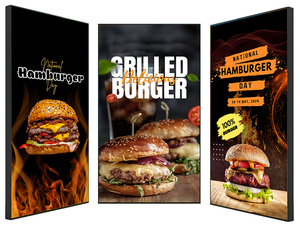
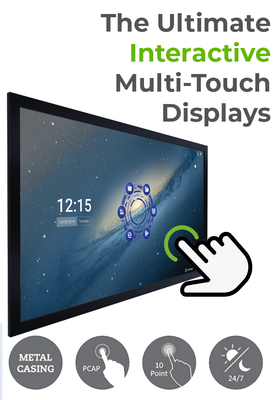


Touchscreen displays are changing how customers interact with retail, hospitality and food service environments - creating faster, more convenient and more engaging experiences.
Retailers are under increasing pressure to improve customer experience while managing staffing challenges, queue times and rising operational expectations. Customers now expect faster service, clearer information and more control over how they browse, order and interact with a business.
Interactive touchscreen displays have become one of the most effective ways to modernise customer journeys across retail stores, cafés, restaurants, gyms, hospitality venues and public-facing spaces. They help customers complete actions independently while giving businesses more flexibility over the way products, services and information are presented.
From product browsing to food ordering, check-in and wayfinding, retail touchscreen displays can turn a passive customer touchpoint into an active digital experience.

Why Touchscreen Displays Are Becoming More Popular
Demand for self service kiosk solutions has grown significantly across hospitality, retail, leisure and public sector industries.
Customers increasingly expect speed, convenience and digital interaction as part of the buying experience. A touchscreen display gives them the ability to browse, compare, order or request information without needing to wait for a member of staff.
For retailers, this creates two benefits at once: a better customer experience and a more efficient operating model. Staff can spend less time answering repetitive questions or processing simple orders, and more time supporting customers who need personalised help.
Touchscreen displays help businesses create faster, smoother and more engaging customer experiences.
How Self-Service Ordering Kiosks Improve Customer Experience

Businesses using a self service ordering kiosk often report improved order accuracy and smoother customer flow.
Instead of relying only on a staffed counter, customers can browse menus, make selections, customise items and submit orders directly through the kiosk. This is particularly useful during peak periods, where queues can affect the overall customer experience.
Self-service ordering also gives customers more time to make decisions. They can review options at their own pace, add extras, check pricing and confirm their order before it reaches the team. This can reduce errors and create a more confident customer journey.
Businesses looking for an ordering kiosk for cafe environments often prioritise compact footprints and reliable touchscreen performance. A professional self-service kiosk supplier can provide systems specifically designed for commercial use.
Self Service Ordering KioskShop Self Service Kiosks
Explore Self Service Kiosk Solutions
Gyms and Leisure Centre Interactive Displays
Touchscreen Displays in Restaurants and Cafés

A modern restaurant self ordering kiosk allows customers to browse menus visually and complete payment independently.
Cafés, takeaways and casual dining venues can use touchscreen kiosks to reduce pressure at the counter while making menu browsing more visual and easier to update. Promotions, add-ons and meal upgrades can be presented consistently on screen, which helps staff maintain speed while customers still receive a clear and branded ordering experience.
Businesses looking for an ordering kiosk for cafe environments often prioritise compact footprints, reliable touchscreen performance and a clean commercial design that fits naturally into front-of-house spaces.
Interactive Retail Displays Improve Engagement
Touchscreen displays are not only useful for ordering. In retail environments, they can also support product discovery, customer education, wayfinding, loyalty sign-ups and interactive brand experiences.
A fashion retailer might use an interactive screen to show colourways, sizes and product combinations. A beauty store might use it to guide customers through product recommendations. A showroom might use it to help visitors compare models, finishes or specifications without needing every option physically displayed.
This type of interaction gives customers more control while increasing dwell time in the store. Instead of walking past static posters, shoppers can actively explore content, browse collections or request support. That creates a more memorable and premium in-store experience.
Choosing the Right Touchscreen Display
The best touchscreen solution depends on the environment, the customer journey and the task the screen needs to support. A compact touchscreen may work well for check-in or loyalty sign-ups, while a freestanding kiosk is often better for ordering, payment or self-service journeys.
Retailers should consider screen size, operating hours, brightness, mounting style, touch technology, software compatibility, payment integration and how the display will be maintained over time.
Commercial-grade touchscreen displays are usually the right choice for public-facing environments because they are designed for longer daily use, higher durability and more reliable performance than consumer tablets or standard domestic screens.
| Use Case | Recommended Solution | Best Environment |
|---|---|---|
| Self-service food ordering | Freestanding ordering kiosk | Cafés, restaurants, takeaways and food halls |
| Product browsing | Retail touchscreen display | Fashion, beauty, electronics and showrooms |
| Visitor check-in | Compact touchscreen kiosk | Hotels, salons, clinics and reception areas |
| Wayfinding | Interactive directory screen | Shopping centres, department stores and leisure venues |
| Loyalty sign-up | Countertop touchscreen display | Retail counters and customer service desks |
| Digital menu display | Ordering kiosk or digital menu board | Cafés, quick-service restaurants and food courts |
| Product demos | Large interactive display | Showrooms, flagship stores and experience centres |
| Interactive showroom | Touchscreen display wall | Automotive, interiors, luxury retail and technology retail |
Commercial Benefits Beyond Customer Experience
A professional self-service kiosk supplier can provide systems specifically designed for commercial use.
- Commercial-grade displays for extended daily operation
- Integrated payment compatibility for ordering journeys
- Portrait touchscreen layouts for space efficiency
- Durable commercial enclosures for public-facing use
- Remote management support for content and software updates
- Professional advice on placement, screen size and customer flow

Looking for Interactive Touchscreen Displays?
Explore ScreenMoove's commercial touchscreen displays and self-service ordering kiosks.
Shop Self Service KiosksFrequently Asked Questions
What are retail touchscreen displays used for?
Retail touchscreen displays are used for product browsing, self-service ordering, check-in, wayfinding, digital menus, loyalty sign-ups, product demonstrations and customer engagement. They help customers interact with information directly instead of relying only on printed signage or staff support.
Do self-service kiosks improve customer experience?
Yes. Self-service kiosks can improve customer experience by reducing queues, giving customers more control, improving order accuracy and making repetitive tasks faster. They are especially useful in restaurants, cafés, takeaways, hotels, retail stores and customer-facing service environments.
What is the best touchscreen display for a restaurant?
The best touchscreen display for a restaurant is usually a commercial-grade self-service ordering kiosk or touchscreen menu system. It should be easy to use, durable, visible in the restaurant environment and suitable for menu browsing, order customisation and payment integration if required.
How do self-ordering kiosks help cafés and takeaways?
Self-ordering kiosks help cafés and takeaways by allowing customers to browse menus, customise orders and place orders without waiting at the counter. This can reduce queue pressure, support upselling, improve order accuracy and help staff focus on preparation and service.
How much do retail touchscreen displays cost?
The cost of a retail touchscreen display depends on the screen size, format, touch technology, software requirements, installation needs and whether it includes kiosk housing or payment integration. Compact touchscreens usually cost less than freestanding self-service kiosks or large interactive displays.
What should I look for in a self-service kiosk supplier UK?
Look for a UK supplier that offers commercial-grade hardware, clear product information, support with display selection, installation guidance and solutions suited to your use case. A good self-service kiosk supplier should understand retail, hospitality and customer-facing environments.
Speak to ScreenMoove About Touchscreen Displays
Get expert advice on touchscreen displays, self-service kiosks and interactive retail technology. Call 020 8191 9223 or send us a message below.


