


Blog post
Best High Brightness Displays for Business
A screen that looks sharp in a showroom can become unreadable the moment it faces a sunlit shopfront. The best high brightness displays are built to keep content visible in difficult light, helping businesses protect campaign impact, menu readability and customer communication throughout the day.
For UK retailers, hospitality venues, transport-facing sites and public environments, brightness is not a cosmetic specification. It directly affects whether customers can see prices, promotions, directions or live information at the point where it matters. Choosing correctly means looking beyond the headline nit rating and matching the display to its location, operating hours and mounting conditions.
What Makes a High Brightness Display the Right Choice?
Commercial display brightness is measured in nits, also known as candelas per square metre (cd/m²). A standard indoor commercial display may sit around 350 to 500 nits. That is suitable for meeting rooms, classrooms, staff areas and many controlled retail interiors, but it is rarely enough for a window exposed to direct or reflected sunlight.
High brightness displays generally begin around 700 nits and extend to 2,500 nits or more. At the upper end, screens are designed for bright shop windows, semi-outdoor locations and installations where natural light changes significantly during the day. The right level is determined by the screen’s actual environment, not simply by choosing the brightest model available.
More brightness can improve visibility, but it can also mean higher power use, more heat output and a greater initial investment. A 2,500-nit screen in a shaded indoor reception area is usually unnecessary. Conversely, fitting a 700-nit display behind south-facing glass may result in washed-out content at the busiest trading hours.
Best High Brightness Displays by Installation Environment
Bright indoor areas: 700 to 1,000 nits
Displays in this range are a strong option for areas with substantial ambient light but no persistent direct sun. Think shopping centre units, airport concourses, bright atriums, gym entrances and restaurant areas with large windows nearby.
A 700 to 1,000-nit commercial screen offers a noticeable step up from a conventional display while remaining practical for long daily operating schedules. For digital menu boards, promotional screens and internal wayfinding, it provides clear content without over-specifying the installation.
This category works best when the display is mounted away from direct sunlight and paired with content designed for distance viewing. High-contrast layouts, bold pricing and uncluttered calls to action will often improve readability as much as additional brightness.
Shop windows and glazed shopfronts: 1,500 to 2,500 nits
Window displays face one of the toughest conditions in digital signage. Direct sun, reflections, changing weather and the distance between the screen and passer-by can all reduce visibility. For most customer-facing shopfront applications, a 1,500 to 2,500-nit screen is the more dependable choice.
These displays are typically engineered for continuous commercial use, with advanced cooling, temperature management and brightness control. They allow retail promotions, property listings, recruitment campaigns and brand advertising to remain legible from the pavement rather than disappearing behind reflections.
The window itself still matters. Tinted glass, laminated glass, internal lighting and the display’s angle can change the result considerably. Before purchase, assess the site at different times of day. A window that seems manageable on an overcast morning may receive strong afternoon sun for several hours.
Semi-outdoor and outdoor locations: purpose-built outdoor displays
A high-brightness indoor display is not automatically an outdoor display. For external installations, buyers need a purpose-built unit with the correct ingress protection, operating temperature range, vandal resistance where required and suitable enclosure design.
Outdoor digital signage is appropriate for drive-throughs, forecourts, stadium approaches, visitor attractions, transport environments and external wayfinding. These screens may offer very high brightness, but their value comes from the complete design: weather sealing, cooling or heating systems, anti-reflective glass and secure mounting all contribute to reliable operation.
Where the screen sits under a canopy or within a sheltered entrance, an outdoor-rated display may still be preferable. Wind-driven rain, condensation and low winter temperatures are real considerations in UK installations.
Do Not Buy on Nit Rating Alone
Brightness is essential, but it is only one part of screen performance. When comparing commercial displays, assess these specifications alongside it:
- Anti-glare and anti-reflective treatment reduces distracting reflections from glass, lighting and daylight.
- Commercial operating hours confirm whether the display is rated for 16/7, 18/7 or 24/7 use.
- Thermal management protects performance in enclosed window bays, warm venues and sun-facing installations.
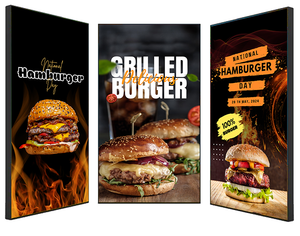
- Panel orientation matters where a display will run in portrait, particularly for digital posters and window advertising.
- Brightness sensors can adjust output in response to ambient light, supporting visibility while avoiding needless energy use.
Content Has to Work Harder in Bright Light
Even the best display cannot compensate for poor content choices. Fine type, pale colour palettes and busy layouts lose impact quickly in bright environments. Window signage should be designed for people walking past, often several metres away, rather than for a viewer standing directly in front of the screen.
Use large type, decisive contrast and a clear hierarchy. A retail promotion might lead with the offer, then product imagery, then a short action message. A takeaway menu board needs pricing and categories to remain clear at a glance, particularly during peak periods when customers are deciding quickly.
Avoid relying on subtle gradients or dark-on-dark visuals. Video can be highly effective, but motion should support the message rather than make prices or key information harder to absorb. If content is managed across multiple sites, a commercial signage CMS makes it easier to schedule daypart messaging, update offers and retain brand consistency.
Installation Decisions That Affect Visibility
The placement of a high brightness display can be as important as its specification. In a shop window, recessing the screen too deeply may create reflections from surrounding glass. Mounting it too close to the glass can restrict ventilation. A professional site survey identifies these issues before they become costly changes on installation day.
Consider viewing direction as well. A screen facing east may need to overcome morning sun; one facing west may experience its most challenging conditions during the afternoon rush. Portrait screens often suit narrow window bays and property advertising, while landscape displays can be more effective for wide-format promotions and digital menu boards.
For multi-screen schemes, consistency is crucial. Mixing panels with different brightness levels or colour performance can make a storefront look uneven, especially when content runs across adjacent displays. Video walls require additional planning around bezel width, calibration, mounting accuracy and the light level across the full display area.
Power, data and service access should also be planned early. Commercial installations need safe cable routing, appropriate mounts and enough access for maintenance without disrupting trade. This is particularly relevant for window displays installed above fixtures, behind fitted joinery or in high-footfall public areas.
When a Standard Commercial Display Is the Better Investment
Not every project needs high brightness. For a corporate boardroom, classroom, hotel conference suite or internal staff communication screen, a standard commercial display is often the more proportionate solution. It can deliver excellent image quality at a lower cost and with reduced energy demand, provided ambient light is controlled.
The decision comes down to legibility at the intended viewing point. If content remains clear during the brightest likely conditions, increasing the nit rating adds little commercial value. If the display is supporting customer acquisition or time-sensitive information in a window, it is worth investing in performance that remains dependable when the light is at its worst.
For projects involving several locations or unusual mounting conditions, Screen Moove can help specify the right display category, software, mounting and installation approach before equipment is ordered. That reduces the risk of a screen that is technically impressive on paper but unsuitable for the site.
The most effective display is not necessarily the brightest one. It is the screen that stays readable, reliable and commercially useful in the exact place your customers will see it.


