


Blog post
Digital Signage Trends 2026 for Smarter Buying
A screen in a shop window that cannot be read in daylight, a menu board that takes hours to update, or a meeting room display with no compatible connectivity creates more work than value. The most relevant digital signage trends 2026 are therefore not simply about larger screens or more elaborate content. They are about building commercial display networks that are easier to manage, more visible in demanding environments and better matched to the job they need to do.
For UK businesses, the buying decision is becoming more specification-led. Retailers need high-brightness storefront displays that hold attention without washing out. Hospitality operators need menu boards that can be changed quickly across multiple locations. Schools and corporate teams need interactive displays that work reliably with the devices and software already in use. The common requirement is clear: commercial-grade hardware, sensible deployment planning and dependable support after installation.
Digital signage trends 2026 are more practical
The strongest trend for 2026 is a move away from one-size-fits-all screens. Buyers are increasingly choosing displays according to operating hours, ambient light, mounting position, viewing distance and content type, rather than starting with the lowest price or the largest available size.
This matters because consumer televisions are rarely designed for the demands of continuous business use. A reception display running throughout the working day, a takeaway menu board operating from morning until late evening, and a retail window screen facing direct sunlight have very different technical requirements. Commercial displays offer longer duty ratings, better thermal management, portrait capability, professional connectivity and warranties suited to business environments.
The result is a more disciplined approach to procurement. Screen size still matters, but brightness, panel orientation, media player compatibility and remote management are now just as likely to determine whether a project performs as intended.
High-brightness displays move beyond premium retail
High-brightness digital signage has long been associated with flagship retail sites. In 2026, it is becoming a more standard consideration for any customer-facing screen positioned near glazing, entrances or bright interior lighting.
A typical indoor display may be suitable for a back-of-house noticeboard or enclosed meeting room. It may not be suitable for a shopfront, estate agent window, gym entrance or hospitality venue with floor-to-ceiling windows. Where sunlight competes with the screen, a higher-brightness commercial display can make the difference between a campaign being noticed and becoming invisible at the busiest part of the day.
There is a trade-off. Higher brightness can mean greater power consumption and a higher upfront cost. It also makes correct placement more important, especially where reflections are a problem. Buyers should assess the environment before selecting a brightness level, rather than assuming every window-facing display needs the highest available specification.
CMS control becomes a core buying criterion
Content management software is no longer an add-on to consider after the screens have been fitted. It is central to how useful the network will be.
Businesses with multiple screens increasingly expect to schedule content by location, time of day and audience. A restaurant group may show breakfast menus in the morning, lunch promotions at midday and delivery messaging in the evening. A college may need to switch communications by campus, building or department. A corporate office may combine visitor information, internal news and meeting room updates from one managed platform.
The important question is not whether a CMS has a long feature list. It is whether the people responsible for content can use it without relying on an external agency for every price change or message update. A well-chosen platform should make it straightforward to upload media, create playlists, schedule content and monitor whether screens are online.
For larger or multi-site deployments, remote device management is particularly valuable. It helps teams identify connectivity issues, restart players where required and maintain consistency across the estate. This reduces the need for avoidable site visits and gives operations teams more confidence that critical messages are actually being displayed.
Players remain relevant, even with built-in system-on-chip displays
Built-in system-on-chip signage screens are increasingly capable and can be a sensible choice for straightforward content playback. They reduce hardware count and can simplify a small installation.
External digital signage players still have a clear place, however. They may offer more processing power, greater flexibility with specialist software, more content formats or easier replacement without changing the display. Video walls, interactive applications and complex data-led content often benefit from a dedicated player.
The right choice depends on the project. For a simple internal communications screen, an integrated solution may be efficient. For a high-impact retail campaign or an estate with evolving technical requirements, separate display and player hardware can provide more control over the long term.
Interactivity is becoming more purposeful
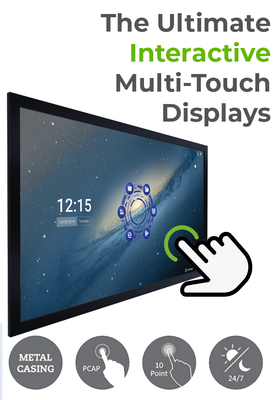
Touchscreen kiosks and interactive displays continue to grow, but the most effective installations are focused on a defined task. A touchscreen should shorten a process, answer a common question or make information easier to access. Adding touch functionality simply because it is available can create queues, cleaning requirements and ongoing content demands without delivering a useful return.
In education, interactive flat panels are increasingly expected to support both in-room teaching and hybrid collaboration. Procurement teams should look beyond screen size and consider touch performance, annotation tools, front-facing connectivity, wireless presentation options and compatibility with existing classroom equipment.
In hospitality, healthcare and public-facing settings, touchscreen kiosks are being used for wayfinding, check-in, self-service information and feedback. Here, enclosure design, accessible mounting height, durability and cleaning procedures matter as much as the software interface. The best solution is one that fits the user journey rather than forcing visitors to adapt to the technology.
LED and video walls are selected for impact, not novelty
Large-format LED displays and video walls remain powerful tools for spaces where visibility and scale genuinely influence footfall, engagement or communication. Reception areas, shopping centres, event venues, transport-adjacent environments and major retail sites can all benefit from a display that is visible from distance and capable of showing dynamic content at scale.
However, a large display is not automatically the right display. LED requires careful consideration of pixel pitch, viewing distance, brightness, maintenance access and the physical structure supporting it. Video walls need consistent panels, appropriate wall mounts, accurate calibration and a content layout designed for the full canvas.
A single commercial display can sometimes produce a cleaner, lower-maintenance result for smaller viewing distances. The decision should be based on the room, audience and content plan, not on a desire to use the most visually dramatic technology available.
Energy, lifecycle and maintainability shape specification
As display networks expand, facilities and procurement teams are paying closer attention to running costs and replacement planning. This is not only an environmental consideration. A poorly specified network can create avoidable energy use, downtime and unplanned call-outs.
In 2026, expect more attention on scheduling screens to operate only when needed, using power-saving settings appropriately and selecting hardware with a duty cycle suitable for the venue. Displays installed in difficult-to-access places, such as ceiling mounts, window bays or high walls, should be chosen with serviceability in mind. Saving money on the initial purchase can be false economy if replacing a failed unit later requires specialist access equipment and disruption to trading.
Standardising equipment across sites can also help. A consistent display range, mounting approach, player type and CMS makes training, support and spare stock easier to manage. It may not suit every estate, particularly where sites have very different lighting conditions or layouts, but it can reduce operational complexity considerably.
Deployment support becomes part of the product decision
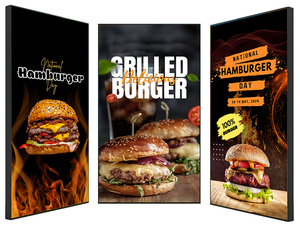
Digital signage is increasingly bought as a complete solution rather than a boxed screen. Buyers want clarity on which display suits the location, how it will be mounted, what software and player are required, how content will be loaded and who will support the system once it is live.
This is particularly relevant where there are multiple screen types in one project: menu boards behind a counter, a high-brightness display in the window, a freestanding totem at the entrance and a meeting room screen in the office. Each may have different installation, connectivity and content requirements, but they should work as a coherent network.
Screen Moove supports this approach with commercial display supply, signage software, installation and technical guidance for organisations that need more than a screen delivered to site. For trade buyers and facilities teams, that joined-up support can reduce procurement risk and speed up rollout.
The most valuable digital signage investment in 2026 will be the one that remains clear, controllable and reliable after the launch campaign has finished. Start with the communication problem, assess the physical environment, then specify the hardware and software around real operating conditions. That is how a screen network becomes a working business asset rather than another device waiting for attention.


