


Blog post
9 Retail Video Wall Examples That Drive Store Sales
A single oversized screen can stop a shopper at the threshold. A poorly planned wall of screens can do the opposite: create glare, show mismatched panels, and make premium stock look ordinary. The best retail video wall examples start with a clear commercial purpose - drawing footfall, supporting a launch, improving navigation, or giving customers a reason to stay longer.
Video walls are not simply larger digital signage displays. They are a physical part of the shop environment, with viewing distance, ambient light, content design, mounting precision and service access all affecting the outcome. The right approach depends on where the wall sits and what customers need to do when they see it.
1. High-brightness window video walls
A street-facing video wall is built for one job: make people notice the store before they pass it. Fashion retailers, mobile networks, beauty brands and department stores use window-facing displays to run bold campaign imagery, product films, live offers and seasonal creative.
Brightness is the deciding specification here. A standard indoor commercial display may look excellent behind the shopfront in the evening, yet appear washed out in direct daylight. Window applications commonly need high-brightness commercial displays, appropriate heat management and content that uses strong contrast rather than fine print.
A tiled LCD video wall can suit deep window bays where the screen surface can sit behind glass. For a more continuous canvas, fine-pitch LED can be a better fit, particularly at larger sizes. LED has no bezel lines, but it needs a sensible minimum viewing distance and careful assessment of pixel pitch, brightness and installation depth.
2. Product launch feature walls
Retailers frequently dedicate a central wall to new collections, limited editions or high-margin product ranges. In a sports shop, this may be a large wall behind new footwear. In consumer electronics, it may show the product in use alongside concise specification messages and launch dates.
The strongest executions do not try to communicate every product benefit at once. They use movement and scale to establish desire, then allow nearby displays, shelf-edge messaging or trained colleagues to provide detail. A video wall is the headline, not the catalogue.
For this type of installation, a 2 x 2 or 3 x 3 commercial LCD configuration often offers a practical balance between impact and budget. Narrow-bezel displays are designed to minimise the grid effect, while commercial-grade panels provide the operating hours, thermal performance and warranty cover expected in busy retail environments.
3. Immersive brand storytelling zones
Some retail spaces need more than a promotional screen. Flagship stores and experience-led locations use large video walls to create a changing backdrop for brand films, atmospheric content and event programming. This is common in automotive showrooms, premium fashion, leisure retail and technology stores.
Here, content quality matters as much as display hardware. A wall intended for cinematic footage needs colour consistency across every panel, a suitable resolution at the expected viewing distance, and a media player or content management platform capable of scheduling high-quality files reliably. Audio can add impact, although it must be controlled carefully in an open shop environment.
LED is often selected for immersive walls because it can be made to unusual sizes and formats. However, LCD remains a strong choice where customers will stand close to the wall, where presentation detail is critical, or where the budget needs greater control. The best technology is not automatically the largest or most expensive one.
4. Digital shop-in-shop displays
A video wall can give a concession or branded area a distinct identity inside a larger store. Cosmetics counters, gaming sections, telecoms zones and premium appliance displays often use a multi-screen wall to separate themselves visually from the surrounding sales floor.
This format works particularly well when content is localised. A national campaign can run across the network, while individual stores promote demonstrations, available stock, trade-in incentives or local events. Central content control prevents inconsistent branding, but local scheduling gives store teams useful flexibility.
Avoid placing a wall where it competes directly with product interaction. If customers need to compare small details on a handset, watch or make-up product, the moving content should frame the area rather than distract from it.
5. Retail video wall examples for promotions
Promotion-led walls are often located at store entrances, end caps and escalator landings, where they can direct customer flow towards a priority area. Supermarkets and large-format retailers may use them to promote seasonal ranges, while home improvement stores can show finished-room inspiration near relevant departments.
The commercial value comes from relevance and timing. A promotion that changes weekly should be easy to schedule centrally, with accurate prices and dates. For multi-site businesses, digital content also reduces the cost and delay of printing and installing new point-of-sale materials at every location.
Keep the message simple. One campaign, one product category and one clear action will generally outperform a busy sequence of unrelated offers. Where prices are shown, make them large enough to read from the real viewing position, not just from a desk monitor during design approval.
6. Queue and service-area walls
Queue areas are a captive audience opportunity, but they must be handled with care. A video wall behind tills, service desks or collection points can reduce perceived waiting time by showing useful product content, seasonal messages, loyalty benefits or order updates.
In food retail and quick-service environments, this can overlap with digital menu boards. The system should be planned so operational information takes priority over brand content. If a customer needs to confirm allergens, collection instructions or current availability, that information cannot be buried in a fast-moving playlist.
Displays in these areas may run for long trading hours, so commercial panels rated for extended use are preferable to consumer televisions. Consider cabling routes, ventilation, secure mounts and access for maintenance before the wall is built into joinery.
7. Interactive video wall backdrops
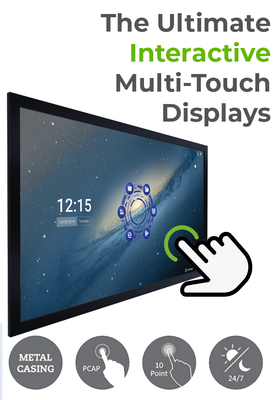
Interactive displays can be combined with a video wall to turn passive viewing into a guided product experience. A large wall may play visual content while a nearby touchscreen lets shoppers browse colours, configurations, compatible accessories or inspiration galleries.
This arrangement is often more practical than making every screen interactive. Large-format touch can be effective, but it is more expensive and can become difficult to use if several customers approach at once. Separating the spectacle screen from the interaction point keeps the experience clear.
For retailers collecting customer data or offering product configuration, the user journey needs proper planning. The screen should help customers reach a decision, not simply provide an impressive digital feature with no sales process behind it.
8. Event and pop-up retail walls
Pop-ups have limited time to make an impression. A freestanding LED wall, modular LCD wall or display wall on a suitable floor stand can create a high-impact destination without permanent building work. It can also be reused for launches, trade events and seasonal activations.
Portability brings trade-offs. Temporary sites still need safe power distribution, secure mounting, adequate ventilation and a reliable content player. LED modules may be quicker to scale for a large activation, whereas a compact LCD arrangement can be easier to transport and deploy where space is tight.
Plan for the venue rather than the ideal creative concept. Ceiling height, entrance width, sightlines and available power can quickly determine what is practical.
9. Operational and wayfinding video walls
Not every retail wall needs to sell directly. Large stores, retail parks and showrooms can use video walls to guide visitors towards departments, promote appointments, highlight demonstrations or provide service updates. This is especially useful where the sales floor is spread across multiple levels or zones.
Wayfinding content should remain calm and readable. Animated backgrounds can support the brand, but directional information must stay visible long enough for a customer to act on it. If the wall is near an entrance, combine general brand content with practical messages that reduce friction from the start of the visit.
Choosing the right wall for the site
Before specifying screens, assess the available wall size, viewing distances, ambient light, operating hours and the route customers take through the store. Then decide whether the installation needs an LCD video wall with narrow bezels, a direct-view LED wall, or a simpler large-format commercial display solution.
A 55-inch display may be ideal in a close-range beauty consultation area, while a large LED wall may be required to stay visible across a showroom. There is no fixed best size. Content resolution, panel layout and the physical environment must work together.
It is also worth considering who will manage the wall after installation. A reliable digital signage platform, correctly specified media players and a clear approval process are as important as the displays themselves. For multi-site retail groups, central scheduling with location-specific content can protect brand consistency while keeping campaigns relevant.
Screen Moove supports retail video wall projects with commercial display hardware, signage software, installation planning and technical support, helping buyers specify systems built for their actual environment rather than a showroom demonstration.
The most effective wall is the one that gives shoppers a clear reason to look, understand and move towards the next step. Start with that customer action, then specify the screens, mounting, brightness and content workflow needed to make it happen reliably.


