


Blog post
Samsung LG Displays for Commercial Signage
A display in a shop window, reception area or quick-service restaurant is not simply a bigger television. It may run for 16 or 24 hours a day, sit under strong lighting and need to receive content updates without a member of staff intervening. Samsung LG displays are both established choices for these environments, but the right decision comes down to the job the screen has to do.
For UK businesses building a signage network, both brands offer commercial-grade screens across standard signage, high-brightness, video wall, touchscreen and meeting-room categories. The most suitable option depends on operating hours, viewing distance, ambient light, content format, installation position and the way the wider network will be managed.
Samsung LG displays: where each brand fits
Samsung and LG both produce professional displays designed for retail, hospitality, education, corporate and public-facing settings. Their ranges include slim bezel displays, landscape and portrait mounting options, built-in media playback and remote management features. Neither brand is automatically better in every installation.
Samsung commercial signage is often specified where businesses want a broad choice of screen sizes, high-impact retail presentation and a familiar all-in-one signage approach. Many models use Samsung's Tizen-based platform, enabling approved content management software to run directly on the display where the application and model support it. This can reduce the need for a separate media player and simplify installation.
LG commercial displays are equally well suited to professional signage projects, particularly where webOS compatibility, commercial panel options or specific physical formats meet the project brief. LG's professional range also covers everything from reception displays and menu boards to ultra-wide formats, video walls and interactive screens.
The practical point is compatibility. A CMS, player, wall mount and installation method should be selected alongside the screen, not after it has been ordered. Built-in system-on-chip players can be an efficient choice for straightforward content loops across multiple sites. A dedicated external player may be more appropriate for complex layouts, live data, advanced interactivity or applications that require a particular operating system.
Commercial display versus consumer TV
A consumer television can appear attractive because the initial purchase price is lower. For occasional use in a staff room or small meeting area, it can have a place. In customer-facing, always-on or multi-site environments, however, it is rarely the strongest long-term specification.
Commercial Samsung and LG displays are built around business use. Depending on the model, this can include longer operating-hour ratings, better heat management, portrait operation, commercial warranties, remote control features and more reliable content playback. They are also designed to integrate with professional brackets, media players and control systems.
A restaurant menu board illustrates the difference. The screen needs to stay clear under ceiling lights, show readable pricing from a distance and continue operating throughout service. If one screen fails, the replacement process needs to be predictable. Choosing a commercial panel from the outset helps protect trading continuity, rather than treating the display as a disposable consumer purchase.
Choose brightness before choosing screen size
Brightness is one of the most consequential specifications in digital signage. It is measured in nits or candelas per square metre. A standard indoor display may be suitable for enclosed spaces with controlled lighting, while a window-facing screen needs considerably more brightness to remain readable in daylight.
For most indoor menu boards, meeting rooms, corridors and reception spaces, a commercial display in the typical indoor brightness range can be effective. Retail windows, glass-fronted gyms and concourse areas often require a high-brightness display. Outdoor installations require purpose-built outdoor signage with weather protection, thermal management and brightness designed for changing daylight conditions.
Buying a very bright screen for a dim office can be unnecessary, but under-specifying a window display is a costly mistake. Content that looks excellent in a showroom can become washed out once the screen faces the street at midday. Assess the site at its brightest point, not only when the premises are quiet or overcast.
Orientation and operating hours matter
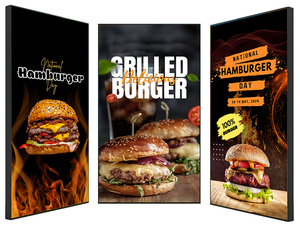
The same screen specification may not suit every mounting position. Portrait displays are common for promotional posters, wayfinding and digital totems, while landscape remains practical for menus, corporate communications and video. Check that the selected model is rated for the intended orientation. Heat rises differently in portrait installation, and displays not designed for it can have a reduced service life.
Operating hours should be equally clear. A screen used during normal retail opening hours has different demands from a reception screen running around the clock. Match the panel's duty rating to the real schedule, including cleaning periods, late events and overnight content where applicable.
Screen size, viewing distance and content layout
Large displays attract attention, but scale alone does not create an effective signage installation. Screen size should be based on the available wall or window space, the distance of the viewer and what they need to read. A 75-inch screen is highly visible in a large foyer, for example, but may overwhelm a narrow café counter where two or three smaller menu screens create a cleaner layout.
Resolution is part of this calculation. 4K displays give content designers more room for detailed imagery, multiple information zones and crisp text. Yet a 4K panel will not solve a poor menu design. If customers have only a few seconds to read offers or prices, use clear type, high contrast and restrained messaging.
For video walls, bezel width is particularly important. Samsung and LG both offer professional video wall solutions with narrow bezels intended to reduce the visible interruption between panels. The planning stage should account for wall structure, power routes, ventilation, calibration and access for future maintenance. A video wall is an installation system, not just a collection of screens.
CMS compatibility and content control
A display network becomes more valuable when content can be updated quickly and consistently. This is particularly relevant for multi-site retailers, restaurant groups, schools and corporate estates. A well-matched CMS allows authorised users to schedule campaigns, change menus, publish notices and monitor playback without visiting each location.
Before selecting Samsung or LG displays, confirm which CMS platforms support the precise model and operating system version. Do not assume that a platform compatible with one screen will work identically across an entire range. Features such as proof of play, emergency messaging, remote screenshots and content approval workflows can vary by software package and player type.
For a simple single-screen application, a USB update or built-in player may be sufficient. For an estate of screens across several locations, a centrally managed CMS and agreed content templates are usually more efficient. They also reduce the risk of an outdated price, promotion or safety notice remaining on screen.
Touchscreens and meeting spaces need a different brief
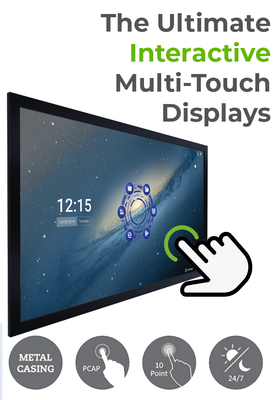
Interactive displays should be selected for touch performance, connectivity and the applications staff or visitors will actually use. Education buyers may need whiteboarding software, front-facing ports and durable touch capability. Corporate teams may prioritise wireless presentation, conferencing compatibility and integration with room-booking systems.
Here, brand preference is only one part of the specification. The best result comes from matching the display, stand or wall mount, camera, audio equipment and control method to the room. A large interactive screen with poor sightlines or unreliable audio will not improve collaboration.
Installation, service and whole-life cost
The cheapest screen is not always the lowest-cost solution. Downtime, unsuitable brightness, a difficult wall installation and inconsistent playback can cost far more than the difference between two commercial models. Consider the full deployment: delivery, mounting, cable management, network access, CMS licensing, commissioning and support.
For larger rollouts, it is worth standardising where possible. A consistent display family can make content production, spares planning and technical support easier. There are exceptions. A retailer may need high-brightness Samsung or LG displays in its windows, standard indoor displays on the shop floor and smaller screens at the till. Standardise the approach, not blindly every product.
Screen Moove can help businesses specify the display hardware, signage software, mounting and installation support as one commercial solution. That is especially useful when a project involves multiple sites, unusual mounting positions or a mix of menu boards, window displays and meeting-room screens.
The strongest display choice is the one that remains clear, reliable and manageable long after installation day. Start with the environment and the business outcome, then choose the Samsung or LG commercial display that earns its place on the wall.


