


 The best restaurant menu screen is not simply the biggest display. It must suit the viewing distance, ambient light, menu layout, operating hours and content management workflow.
What This Digital Menu Screen Guide Covers
What Makes a Good Digital Menu Display Screen?
A good digital menu display screen must stay readable during busy service, present prices and product categories clearly and support quick content updates. The right specification depends on the installation position rather than the restaurant type alone.
32 and 43-inch screens work well in compact cafés. 55 inches is a strong all-round counter size. 65 to 75 inches suits larger spaces and feature walls.
Standard indoor screens suit controlled lighting. Window-facing displays require much higher brightness to remain visible in daylight.
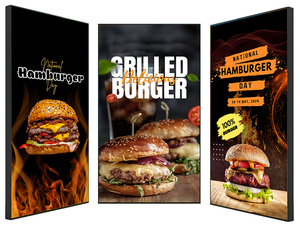
Landscape works well above counters. Portrait is useful for narrow menu columns, promotions, desserts and queue-side messaging.
Choose commercial signage rather than a domestic TV when the screen will run for long hours, needs scheduled power control or forms part of a multi-screen menu wall.
For a ready-made restaurant package, compare ScreenMoove's digital menu boards.

Digital Menu Board vs Printed Menu
Printed menus are inexpensive to produce initially, but every price change, product launch or seasonal campaign creates another redesign and print cycle. A digital menu display screen costs more upfront but can reduce ongoing print waste and give the restaurant far more control.
- Update prices, availability and promotions without reprinting.
- Schedule breakfast, lunch and evening menus automatically using signage management software.
- Promote higher-margin products and limited-time offers.
- Manage multiple branches from one content platform.
- Adapt menus quickly when stock or legislation changes.

Best Digital Menu Screens by Restaurant Type
Quick-service restaurants and takeaways
QSR counters often need two or more 43 to 55-inch landscape screens above the order point. Kiosks can reduce queues and move ordering away from the staffed till. See ScreenMoove's self-service ordering kiosks.

Cafés and bakeries
Compact cafés may only need one 32 or 43-inch screen, while high-street windows require a high-brightness display that can compete with daylight and reflections.
Full-service restaurants
A full-service venue may use one larger 65 or 75-inch screen for specials, drinks, events or seasonal campaigns rather than presenting the full menu digitally. For wider applications across restaurants, hotels and leisure venues, explore ScreenMoove’s hospitality digital signage solutions.

Food courts and shopping centres
Food courts benefit from large, highly visible screens or video wall menu displays. Sightlines, ceiling height and the distance from the queue should guide screen size.

How Much Does a Restaurant Menu Screen Cost?
Restaurant menu screen cost depends on the number of displays, screen size, brightness, mounting, media players or built-in operating system, content software and installation. A simple single-screen café setup can cost far less than a multi-screen QSR counter, video wall or self-service kiosk deployment.
Budget for the full system rather than the panel alone. Typical project components include the screen, bracket, cabling, content design, software licence, installation and ongoing support. ScreenMoove also offers a digital menu design service and professional installation.


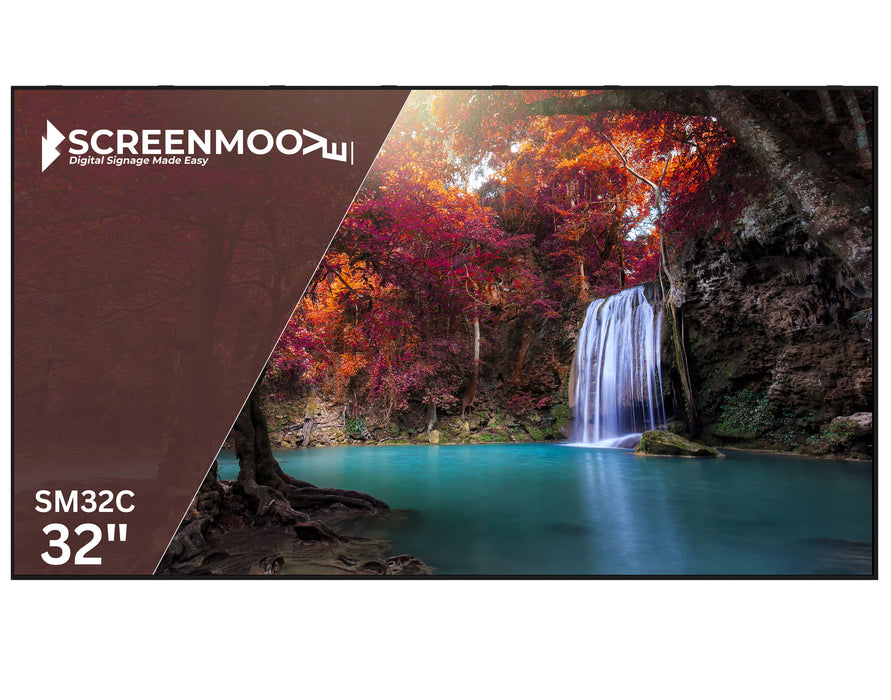
Core Digital Menu Screens
Commercial menu boards, kiosks and video wall displays that are the strongest direct fit for restaurants, cafés, QSRs and food courts.







Mounting, Software and Installation
Restaurant menu screens are normally wall-mounted, ceiling-suspended or installed on specialist multi-screen rails. The correct choice depends on wall structure, counter position, screen count, ventilation, access for maintenance and the required viewing angle.
Compare ScreenMoove's menu board mounting systems for cleaner multi-screen alignment. Professional installation is strongly recommended for large panels, ceiling mounts, video walls and any project involving multiple screens above a customer queue.


