


Blog post
Best Digital Totems Retail Buyers Can Deploy
A freestanding screen can either stop a shopper, guide them towards the right department or become an expensive obstacle near the entrance. The best digital totems retail teams deploy are selected around the customer journey, the installation environment and the content they need to show - not simply the largest screen available.
For shops, showrooms, supermarkets and multi-site estates, a commercial digital totem provides a highly visible place for campaigns, wayfinding, product information and interactive services. It also needs to work reliably through long trading hours, withstand regular public use and remain manageable when promotions change. That is why commercial specification matters from the first conversation.
What Makes a Digital Totem Right for Retail?
A retail digital totem is a freestanding commercial display enclosed within a purpose-built housing. Most use a portrait screen because this format suits promotional creative, product imagery and vertical video, although landscape and double-sided configurations are available where the site calls for them.
Unlike a consumer television on a stand, a commercial totem is designed as a complete installation product. The enclosure protects the display and player, cable management keeps the installation tidy, and the base is engineered for stability in customer-facing locations. Depending on the model, the screen may include a built-in Android media player, a touch layer, an internal PC compartment or a high-brightness panel for areas exposed to daylight.
The best option depends on the job it must perform. A fashion retailer promoting seasonal collections has different needs from a DIY store helping customers locate stock, or a shopping centre giving visitors directions. Start with the outcome, then choose the hardware.
Best Digital Totems Retail Teams Should Prioritise
Standard indoor advertising totems
For internal aisles, entrances and point-of-sale zones, a 43-inch, 50-inch or 55-inch indoor portrait totem is often the strongest all-round choice. These displays are suited to scheduled promotions, campaign videos, brand messaging and product launches. A commercial-grade panel with a 24/7 or 16/7 duty rating is a sound fit for most retail operating hours.
Brightness is the first specification to check. Around 450 to 700 nits is usually appropriate for controlled indoor lighting. If the screen sits opposite glazing, near a bright doorway or below powerful shop lighting, more brightness may be needed to keep colours and text clear. Selecting too dim a screen is a common and costly mistake, since even well-designed content cannot compensate for poor visibility.
High-brightness window-facing totems
Window displays compete with daylight, reflections and passing traffic. A standard indoor screen can look washed out in this setting, especially when the sun reaches the glass. High-brightness digital totems are designed for these demanding locations, typically using panels rated at 1,000 nits or above.
There is a trade-off. Higher brightness creates more heat and increases power consumption, so the enclosure and ventilation must be appropriate. It is also worth checking whether the display is intended for direct window placement or for indoor use behind glass. The right specification will protect screen performance and reduce the risk of premature failure.
Touchscreen totems for self-service
Interactive digital totems earn their place when they remove friction for staff or customers. They can support product finding, endless aisle ordering, loyalty registration, store directories, size guides, appointment booking and data capture. In larger stores, touchscreen wayfinding can reduce repeated directional questions at the till or customer service desk.
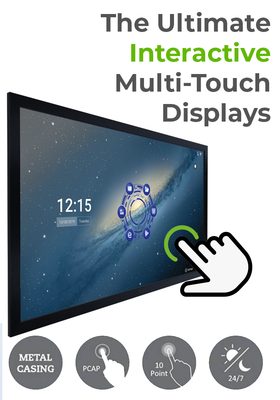
For public-facing use, projected capacitive touch is generally the preferred technology. It offers a familiar smartphone-style experience, supports multiple touch points and presents a clean glass front. The software must be considered alongside the screen. A touch display without a clear user journey, reliable connectivity and a process for updating information quickly will not deliver the expected return.
Double-sided totems for open retail spaces
Where customers approach from more than one direction, a double-sided digital totem can provide more value from a single floor position. They work particularly well in shopping centres, department store walkways, airport retail areas and large-format stores with wide circulation routes.
The key consideration is content planning. Both sides can carry the same campaign for maximum repetition, or each can target a different direction of travel. A double-sided unit needs sufficient space around it and careful consideration of sightlines, pedestrian flow and access for maintenance.
Outdoor-rated totems
Outdoor digital signage needs far more than a weather-resistant cabinet. Rain, direct sun, temperature changes, vandal resistance, glare and electrical protection all need to be addressed. Outdoor totems are useful for retail parks, forecourts, click-and-collect areas and entrances, but they should be specified as part of a site survey rather than bought as a standard indoor unit with extra protection.
An outdoor deployment may require groundwork, power provision, connectivity planning and local approvals. It is a higher-investment installation, but it can place timely messaging directly in the path of customers before they enter the store.
Screen Size, Placement and Viewing Distance
Bigger is not automatically better. A 55-inch totem creates an excellent promotional presence at an entrance or in a wide mall walkway, but it can dominate a smaller boutique. A 43-inch unit may be the better choice where floor space is limited or the viewing distance is short.
As a practical rule, assess where the customer will first see the display and how far away they will be when reading its main message. Large campaign imagery can work from several metres away, while pricing, product details and QR codes need closer viewing. The height of the screen also matters. The most useful content should sit comfortably within a shopper's natural line of sight, not at the bottom of the enclosure.
Do not place a totem where it narrows access, blocks merchandise, creates a trip risk or clashes with queue management. Retail space is valuable, so each unit should have a defined commercial role rather than being added as decoration.
The Specifications That Protect Your Investment
Commercial reliability should be at the centre of the buying decision. Look beyond resolution and confirm the panel's operating hours, warranty, brightness rating, orientation support and thermal management. Portrait use is particularly significant: not every display is designed to run in portrait orientation for extended periods.
A commercial-grade screen is built for long sessions and repeated daily operation. It normally provides stronger thermal control, more suitable warranty terms and better compatibility with signage players and remote management tools than a domestic television. The upfront price may be higher, but replacement costs, downtime and inconsistent presentation can make consumer hardware a false economy.
Also consider the enclosure finish. Black is widely used and suits most environments, while white or custom vinyl wraps can align the unit with a brand or store design. For high-traffic areas, choose a housing that is easy to clean and resistant to everyday scuffs.
Content, CMS and Connectivity
A digital totem is only as effective as the information it shows. Retail content should be quick to understand from a distance, with one primary message per creative. Use high-contrast text, readable prices and strong product photography. Motion is useful for drawing attention, but constant movement can make a message harder to absorb.
A cloud-based content management system allows central teams to schedule campaigns by store, screen group, daypart or location. This is particularly valuable for multi-site retailers running local offers alongside national campaigns. Confirm whether the totem has an integrated player or needs an external digital signage player, and ensure the selected software supports the formats, scheduling controls and proof-of-play reporting your operation requires.
Connectivity should be agreed early. Wired network connections are generally the most stable option, while Wi-Fi can be practical where cabling is difficult. For sites with limited infrastructure, a managed 4G or 5G connection may be suitable, although data use and ongoing costs need to be factored into the project.
Installation Is Part of the Specification
Freestanding does not mean installation-free. The display needs a safe, level location, an accessible power supply and a method for securing the base where required. In public spaces, safety assessments may determine whether floor fixing, additional weighting or a particular cable route is necessary.
For a single indoor unit, delivery and placement may be straightforward. For a chain-wide rollout, professional installation brings consistency across stores and avoids local variations in positioning, connectivity and commissioning. Screen Moove can support the wider process with commercial hardware, signage software, installation and technical advice, helping retail teams specify a solution that is practical to operate after launch.
The best retail digital totem is not the one with the longest specification sheet. It is the one customers can see clearly, staff can update without delay and your business can depend on throughout the trading day.


