



Blog post
Interactive Flat Panel vs Whiteboard Compared
A whiteboard can be fitted in an afternoon and used immediately. An interactive display can transform the way a team presents, teaches, annotates and shares work - but only if the room, users and support plan justify the investment. The interactive flat panel vs whiteboard decision is therefore not simply about replacing pens with touch technology. It is about choosing the right working surface for the way people actually communicate.
For schools, meeting rooms, training spaces and public-sector environments, both options still have a place. The strongest choice depends on whether the priority is fast, low-cost visual communication or richer collaboration that connects people, content and devices.
Interactive flat panel vs whiteboard: the practical difference
A conventional whiteboard is a non-digital writing surface. It is inexpensive, familiar and requires no power, network connection or user training. Staff can write, erase and move on. That simplicity is valuable in smaller meeting rooms, back-office areas, workshops and classrooms where quick notes matter more than digital content.
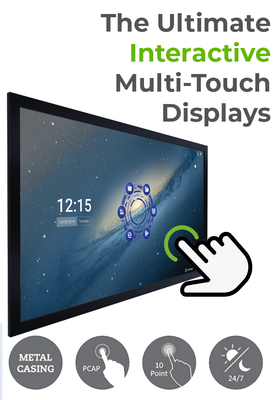
An interactive flat panel is a commercial-grade touchscreen display, typically available from 55 to 86 inches and beyond. It combines a high-resolution screen, touch capability, integrated whiteboarding tools and wireless or wired presentation options. Many models support multiple simultaneous touch points, allowing several pupils, colleagues or workshop attendees to write on screen at once.
The key difference is what happens after the session. A whiteboard’s content is temporary unless someone takes a photograph or copies it manually. An interactive flat panel can save annotations, distribute files, display video, open documents, bring remote participants into the conversation and return to previous work later. For organisations increasingly using Teams, Zoom or cloud-based collaboration tools, this continuity can be more valuable than the screen itself.
Where a whiteboard remains the sensible choice
A whiteboard is not outdated simply because interactive displays exist. It remains the right commercial decision where a room needs a dependable, low-maintenance surface for brief discussions, task allocation or simple visual planning.
Facilities teams also favour whiteboards in spaces where damage, dust, heavy use or limited supervision are likely. There are no software updates, operating systems, cables or account permissions to manage. If a meeting room is used mainly for a handful of people to sketch ideas for ten minutes, a quality magnetic whiteboard may be all that is required.
Cost is another clear advantage. The purchase and fitting cost is modest, and ongoing expenditure is largely limited to markers, erasers and cleaning products. For a multi-room rollout where digital collaboration is not a requirement, this can make whiteboards the more proportionate option.
There are limitations, however. Handwriting can be difficult to read, permanent records are awkward to capture, and remote staff cannot engage with the board in real time. A whiteboard also cannot display presentations, dashboards, timetables, teaching resources or video content without a separate screen alongside it.
What an interactive flat panel adds
An interactive flat panel turns the front of a room into a shared digital workspace. In a classroom, a teacher can annotate a worksheet, play a lesson clip, bring up a map or manipulate learning content directly on the display. Pupils can contribute at the screen rather than watching a presentation passively.
In corporate meeting rooms, the same panel can show a presentation, host a video call and capture decisions as digital notes. This reduces the familiar problem of a meeting ending with a board full of useful ideas and no clear record of who needs to do what next.
Most commercial interactive displays support a range of input methods, including HDMI, USB-C and wireless screen sharing. USB-C is particularly useful in modern meeting spaces because a compatible laptop can often receive video, touch control, network connectivity and charging through one cable. That makes the room easier to use for visiting staff and clients, without a desk covered in adaptors.
Commercial models are also designed for regular professional use. Buyers should look beyond screen size and consider 4K resolution, anti-glare glass, brightness, touch response, speaker quality, integrated Android features, OPS PC compatibility and warranty cover. A panel installed in a busy college classroom has different requirements from one used twice a week in a boardroom.
The cost question is bigger than the purchase price
The upfront price difference between an interactive flat panel and a whiteboard is substantial. A whiteboard is the low-cost option. An interactive display involves the panel, wall mount or mobile trolley, installation, possible cabling, and sometimes a separate PC, camera or soundbar for conferencing.
That does not automatically make the panel expensive in business terms. The better comparison is cost against use. If a display replaces a projector, presentation screen, whiteboard and separate collaboration device, it may simplify the room rather than add complexity. If it helps a training team reuse materials, enables hybrid meetings or reduces delays caused by unreliable presentation equipment, the return can be tangible.
Buyers should also account for ownership over time. Whiteboards need replacement markers and periodic resurfacing or replacement when staining becomes severe. Interactive panels need power, software management and occasional technical support. Commercial-grade displays are preferable to consumer televisions because they are built for professional environments, offer more appropriate connectivity and are supported with business use in mind.
For multi-site organisations, standardisation matters. Selecting one display platform across meeting rooms or classrooms can make training, support and spare-part planning more straightforward. It also gives IT teams a clearer route for managing updates, network access and user permissions.
Installation and room planning matter
An interactive display will only perform well if it is fitted at the correct height and in the right position. In education, younger pupils need to reach the lower part of the panel safely. In boardrooms, the centre of the display should sit at a comfortable viewing height for seated participants. A mobile trolley can be useful for flexible teaching spaces and training rooms, but a wall-mounted panel generally provides a cleaner, more permanent finish.
Screen size must match viewing distance. A 65-inch panel may work well in a small meeting room, while a larger classroom or training suite may require 75 or 86 inches for readable text at the back of the room. Choosing too small a display is a common false economy, particularly when spreadsheets, technical drawings or detailed lesson content are involved.
Glare is another consideration. Windows, lighting and room orientation can affect readability. Commercial panels with anti-glare surfaces are helpful, but positioning still matters. For rooms with intensive video conferencing, plan camera placement, microphone pickup, speaker coverage and cable routes before installation rather than treating them as add-ons.
Choosing by use case
For education, interactive flat panels are usually the stronger long-term choice when teaching includes digital resources, classroom participation and reusable lesson materials. A conventional whiteboard may still be useful as a secondary surface for quick working or timetable notes.
For meeting rooms, the decision depends on the meeting style. A small room used for informal stand-ups may only need a whiteboard. A client-facing room, project space or hybrid meeting room is better served by an interactive panel with conferencing capability and simple device connectivity.
For training centres, healthcare settings and public-sector organisations, the ability to display controlled digital information and save session notes can justify an interactive display. It is particularly useful where compliance, handovers or repeatable processes require a reliable record.
For warehouses, kitchens, staff rooms and operational areas, a whiteboard can remain the most practical choice. It is immediate, visible and unaffected by network availability. Where live KPIs, shift information or video instructions need to be shown, a non-touch commercial display may actually be a better fit than either option.
A better buying decision starts with the workflow
Before specifying a panel or ordering a whiteboard, ask what people need to do in the room. If the answer is write temporary notes, a whiteboard is difficult to beat. If they need to present, annotate digital files, involve remote colleagues and retain what was discussed, an interactive flat panel is the more capable investment.
The most effective spaces often use both: a commercial interactive display as the main collaboration point, with a simple whiteboard nearby for quick notes that do not need a digital record. Screen Moove can help organisations specify the appropriate display size, mounting approach and conferencing hardware for the space, so the result supports real work rather than becoming another underused piece of technology.


