


Blog post
Shop Window Display Screens Guide for UK Retail
A shop window has a few seconds to earn attention before a passer-by carries on walking. That is why this shop window display screens guide starts with the specification that matters most: whether the message can actually be seen through glass, in daylight, and from the pavement.
A standard television may look convincing in a dim showroom, then appear washed out behind a sun-facing window. Commercial window displays are designed for the harder job. They combine higher brightness, longer operating capability and signage-ready controls so retailers can promote offers, products and brand campaigns consistently throughout the trading day.
Start with the window, not the screen size
The right display depends on the physical conditions around it. Before choosing a screen, assess the width and height of the glazing, the distance to the pavement, the direction the window faces and whether direct sunlight reaches the glass. A bright south-facing frontage needs a very different solution from an enclosed shopping-centre unit.
Viewing distance determines how large text and product imagery need to be. A screen seen from directly outside the shop can carry more detailed content, while a display intended to pull attention from across a high street needs bold headlines, strong contrast and larger visual elements. Bigger is not always better if it blocks natural light, crowds the window or makes the content difficult to scan.
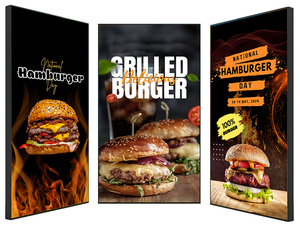
Portrait screens work well for fashion, beauty, property and campaign-led retail because they mirror the proportions of posters and people. Landscape displays suit wider promotional creative, price-led advertising and menu-style layouts. Where customers approach from both directions, a hanging double-sided display can put the same campaign in view of footfall travelling either way.
Brightness is the key window display specification
Brightness is measured in nits, also called candelas per square metre. Indoor commercial displays commonly operate around 350 to 500 nits. They can be suitable for sheltered interiors, but are rarely the right choice for a shop window exposed to daylight.
For most storefront applications, 1,000 nits should be treated as a practical starting point. Bright windows, direct sun and highly reflective glazing may require 2,500 nits or more. A high-brightness commercial display gives content the contrast needed to remain readable when reflections, changing weather and ambient light compete with it.
There is a trade-off. Higher brightness screens use more energy and generate more heat, particularly when fitted inside a narrow window bay. They therefore need suitable ventilation, a commercial mounting solution and an installation plan that does not trap heat behind the screen. Displays intended for window use often include thermal management and brightness controls to protect performance over extended operating hours.
Do not judge brightness in isolation. Anti-glare or high-haze panels can reduce reflections, while a correctly positioned screen can avoid the worst of direct light. If the glass itself is heavily tinted, printed with graphics or affected by condensation, test visibility before committing to a larger rollout.
Commercial-grade operation matters
Retail window content often runs from opening until late evening, and some locations operate displays for 16, 18 or 24 hours a day. Consumer televisions are not built around this duty cycle. Their warranty conditions, cooling design and panel controls are generally unsuitable for demanding commercial signage use.
A commercial display is designed for continuous operation, portrait or landscape mounting, remote management and connection to a media player or signage platform. It also provides a more dependable foundation for multi-site campaigns, where a failed screen or mismatched image damages the consistency of the brand.
Choosing a screen type for the job
High-brightness LCD displays remain the most common choice for shop windows. They offer familiar screen sizes, strong image clarity and a practical route to single-screen or multi-screen installations. For independent retailers, one well-positioned 43-inch, 55-inch or 65-inch display can transform a frontage without making the window feel overloaded.
Larger retailers may use a video wall to create a more commanding visual statement. Narrow-bezel commercial panels can combine into a single campaign canvas for launches, seasonal promotions and high-impact advertising. The consideration is content: it must be designed for the screen arrangement, especially where bezel lines fall between images and text.
Commercial LED is another option for exceptionally bright or large-scale applications. It is particularly useful where viewing distance is greater or the display needs to be visible across a forecourt, transport area or expansive glazed frontage. LED can deliver serious presence, but pixel pitch, mounting depth, structural support and content resolution need careful planning. It is not automatically the best choice for close-up viewing.
For smaller stores, an outward-facing digital poster can be a cost-effective alternative. These displays are designed to present full-screen promotional content in portrait format and can be positioned close to the glass where passers-by naturally look.
Installation details that affect reliability
A screen mounted in a shop window becomes part of the building environment, not just a piece of AV hardware. It needs a mount rated for the display’s size and weight, securely fixed to a suitable surface and positioned to maintain access for servicing. Cable routes should be tidy, protected and planned before the final installation.
Power and network access are equally important. A local media player may need mains power, while a cloud-managed signage network needs a reliable internet connection. Wireless can work well in some sites, but a wired connection is often preferable for business-critical displays, busy retail locations and high-resolution video content.
Heat is one of the most overlooked issues. Screens should not sit against radiators, enclosed joinery or direct sunlight without an assessment of airflow. In some projects, an installer may recommend venting, spacing around the display or a specialist enclosure. This adds cost, but it is cheaper than repeated faults, shortened panel life or an unusable display during a promotion.
UK retailers should also consider electrical safety, safe mounting and access requirements. Landlords, centres and local authorities may have their own rules for alterations to shopfronts, especially in listed buildings or conservation areas. Resolve these early rather than ordering equipment before the site is approved.
Content and software decide whether the screen sells
The display is only as effective as the message it carries. Window content should work without sound and communicate its main point almost immediately. Keep the offer, product or call to action prominent. Small print, dense menus and detailed web addresses do not perform well when customers are walking past in changing light.
Digital signage software makes it possible to schedule content by time, location and campaign. A café can promote breakfast in the morning and meal deals later in the day. A fashion retailer can switch from a launch film to a weekend offer. Multi-site operators can apply approved artwork across every branch while retaining the ability to tailor pricing or local information.
Use short video carefully. Motion catches the eye, but constant rapid movement can make a window look cluttered and can distract from the actual product display behind the glass. Still imagery with subtle animation is often more legible. Content should be designed at the display’s native resolution and tested on-site, not just approved on an office monitor.
Build a sensible refresh plan
A window screen that shows last month’s offer quickly becomes background noise. Plan campaigns around trading patterns, stock availability and seasonal moments, then assign someone responsibility for keeping material current. For promotional retail, weekly updates may be appropriate; for brand-led messaging, a longer cycle can work.
The operational benefit of a managed signage platform is not simply faster updates. It is control. Teams can approve creative, set expiry dates, monitor device status and avoid a stale promotion remaining live after stock has gone.
Budget for the complete display solution
The display price is only one part of the investment. A realistic budget includes the commercial screen, mount or enclosure, media player, software licence where required, cabling, installation and any network or electrical works. For a multi-site rollout, allow for content creation, remote support and replacement planning as well.
Choosing the lowest-priced panel can be false economy if it lacks the brightness, duty rating or warranty required for a storefront. Equally, specifying the highest-brightness model for a shaded indoor arcade may spend budget where it brings little benefit. The right choice is based on the site survey and the commercial objective.
Screen Moove can support buyers with commercial display selection, signage software, installation planning and nationwide delivery, helping turn a specification into a working storefront solution.
A good shop window display does more than play a loop. It gives every passing customer a clear reason to stop, look closer and step through the door.


