
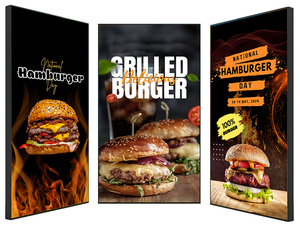


 Motion is most effective when it creates a clear visual change, earns attention quickly and delivers one message at a time.
A customer can walk past a beautifully designed poster and barely register it. Put movement on a screen in the same sightline and the visual system has a new event to process.
That does not mean every animation automatically performs better than every static sign. It means motion gives marketers an additional attention cue — change over time — which can help content compete in visually busy environments. For retailers, gyms, hospitality spaces and workplaces, that is one of the biggest strategic advantages of commercial digital signage displays.
The useful question is not simply “video or poster?” It is: how does human attention decide what deserves a second look, why does repeated static content fade into the background, and how can motion be designed to attract attention without overwhelming the viewer? This guide breaks down the psychology and translates it into practical digital signage content strategy.
How Human Attention Actually Works

We are surrounded by more visual information than we can consciously examine in detail. Attention acts as a selection system. Before we consciously decide to read a message, the visual system is already reacting to qualities such as contrast, size, position, colour, novelty and movement. Designers often refer to this as visual salience: some elements stand out strongly enough to compete for processing priority.
This matters because commercial signage usually gets only a fraction of the viewer’s available attention. A shopper may be navigating a doorway, talking to someone, checking a phone or scanning shelves. A gym member may be moving between equipment. A visitor in reception may be looking for directions. Your content is rarely the only thing in view.
Salience
Elements that differ from their surroundings are more likely to stand out. Contrast, scale and motion can all increase visual priority.
Selective Attention
People focus on what seems relevant to the current task. Signage needs to earn a place in that limited focus rather than assume it will be read.
Habituation
Repeated, unchanged stimuli become easier to ignore. Content freshness matters because familiarity can reduce the power of the visual cue.
Why the Brain Is Wired to Notice Movement
Movement is a powerful visual event because it signals that something in the environment has changed. Human vision is highly sensitive to changes across the visual field, including activity outside the exact point we are directly looking at. That is useful in everyday life: movement may indicate another person, a vehicle, an approaching object or a change that deserves rapid orientation.
Digital signage can use the same principle at a much smaller, non-alarming scale. A gentle product transition, moving texture, animated price reveal or changing composition can give the eye a reason to re-orient towards a screen. The strongest work tends to use motion as a cue to the message rather than motion for its own sake.
Motion creates a new visual event, giving the eye a reason to look again.
The Static Signage Problem: Familiarity Can Make Content Disappear
Static signage has important strengths. It is simple, immediate and can work extremely well when the message is short, the placement is strong and the creative is distinctive. The problem appears when the same visual sits in the same place for too long, especially in environments people visit repeatedly.
Over time, familiar visual material can become part of the background. In digital interfaces, a related behaviour is often called banner blindness: people learn to overlook areas or formats that repeatedly resemble advertising. In physical environments, habituation creates a similar practical challenge. Once viewers know that a particular sign never changes, there is less reason to inspect it again.
The advantage of digital signage is not simply that the screen moves. It is that the content can change, sequence and refresh — reducing the risk that the display becomes permanent visual wallpaper.
This is why a content strategy should plan for rotation, dayparting and creative variation rather than treating a commercial display like a backlit poster. Even subtle changes can signal that there is something new to notice.
What Motion Content Does Differently
Good motion content changes the communication problem. A static poster has to present everything at once. A moving sequence can reveal information in stages, direct the eye, create hierarchy over time and give one screen several useful states without cramming every message into a single composition.
It creates a fresh attention cue
A transition, movement or change can interrupt visual routine and encourage the viewer to orient towards the screen.
It can sequence the message
Headline first, benefit second, call to action third. The viewer is not asked to process every element at exactly the same moment.
It supports more content without more clutter
Several offers or messages can occupy the same screen across a loop while each individual frame stays visually simple.
It can reward a longer glance
If the opening frame earns attention, the next few seconds can deepen the message through demonstration, transformation or story.
This makes dynamic content particularly useful for product demonstrations, before-and-after sequences, menus, promotional countdowns, event schedules, brand storytelling and environments where the same audience passes the same display repeatedly.
Where Motion Content Performs Best
Motion is most valuable where the audience is moving, the environment is competitive or the screen has to communicate more than one message across the day. The right creative approach depends on viewing distance, dwell time and what the viewer is doing when the display enters their sightline.
Retail windows and shop floors
In retail, motion can help a screen compete with products, lighting, signage and foot traffic. Window content can use movement to create a moment of contrast for people passing outside, while in-store screens can sequence launches, promotions and brand content. See ScreenMoove’s approach to digital signage for retail shops.
Gyms and fitness spaces
Fitness environments already contain movement, so the creative needs enough contrast to stand out without becoming chaotic. Short loops, class promotions, membership messages and energetic branded animation can work well when the screen is positioned in natural pause points. Explore gym and fitness digital signage for more application ideas.
Reception areas, hospitality and video walls
Lobbies often offer longer dwell time, which creates room for slower, more atmospheric motion. Corporate storytelling, welcome content, event information and branded visual sequences can work particularly well across large-format video wall displays. If you are planning a multi-panel LCD installation, read our guide on how to configure an LCD video wall display.
How to Use Motion Without Overwhelming the Viewer
Motion can attract attention, but excessive motion competes with the message it is supposed to support. The goal is controlled visual change: enough to create interest, not so much that every element demands attention at once.
- Lead with one idea. Give each scene one dominant message, product or action.
- Keep copy readable at a glance. Viewers should not have to wait through an entire loop to understand the point.
- Use motion to guide hierarchy. Reveal, slide, scale or transition the element you want noticed next.
- Match pace to dwell time. Fast-moving retail footfall needs quicker comprehension; a reception area can support slower sequences.
- Build in calm frames. Constant movement can reduce clarity. Static holds between transitions help the message land.
- Refresh the schedule. Even animated content can become familiar if exactly the same loop runs indefinitely.
You will often hear “seven seconds” used as a practical rule of thumb for signage scenes. Treat it as a starting point rather than a law. A simple price message may need much less time; a product demonstration may need longer. Test the actual viewing context and optimise for comprehension.
Scheduling tools make this easier by letting you rotate creative by time, location or campaign rather than relying on one endless loop. ScreenMoove’s digital signage software can support a more structured content calendar across your display network.
Planning a new digital signage project or refreshing an existing screen network? ScreenMoove can help with commercial displays, installation, content delivery and the practical setup behind a reliable rollout.
Motion Content and Digital Signage FAQs
Attention Is Earned, Not Guaranteed
Motion gives digital signage a valuable advantage over fixed print: it can create change, guide the eye, sequence information and stay fresh. But the best content does not simply move more. It uses motion deliberately to make the message easier to notice and easier to understand.
If you are planning a display rollout, ScreenMoove can help you choose the right hardware and delivery setup. Speak to ScreenMoove’s installation team, explore why businesses choose ScreenMoove, or contact the team for project advice.


