


Blog post
Digital Totem Advertising Solutions for UK Sites
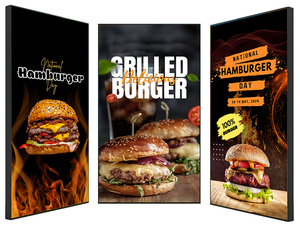
A poster cannot change when the weather turns, stock runs low or a lunchtime promotion needs an extra push. A well-specified digital totem can. Digital totem advertising solutions give businesses a prominent, professional format for campaigns, wayfinding, product messaging and paid advertising - without replacing printed material every time the message changes.
For retail, hospitality, leisure, education and public-facing venues, the value is not simply putting a screen on the floor. It is choosing a commercial display that remains visible in its location, is simple for staff to manage and supports the way customers actually move through the space.
Where digital totems deliver commercial value
A freestanding digital totem earns its footprint when it reaches people at a decision point. In a retail entrance, it can introduce seasonal offers before customers enter the shop floor. Near a till point, it can promote add-ons, loyalty programmes or product launches. In a hotel lobby, it can combine local information, restaurant promotions and event messaging. In a college or corporate reception, it can direct visitors and communicate timely notices.
The format is particularly useful where wall space is limited or where a screen needs to be visible from more than one approach. Slim, enclosed housings create a more finished appearance than mounting a standard display on a trolley, while a built-in media player or compatible external player keeps the installation focused on commercial operation rather than consumer TV workarounds.
There is also a clear opportunity for venues that sell advertising space. Shopping centres, gyms, transport locations and hospitality businesses can reserve part of the playlist for partner promotions. That model only works if the display is reliable, content is scheduled carefully and the site can show advertisers that campaigns were delivered as agreed.
Choosing digital totem advertising solutions by location
The right specification depends on the environment, viewing distance and operating hours. Buying on screen size alone often leads to a display that is difficult to read, over-specified for an indoor lobby or insufficiently protected for an exposed site.
Indoor entrances, retail floors and reception areas
For typical indoor environments, a commercial-grade LCD totem with a Full HD or 4K panel is usually the practical starting point. Screen sizes from 43 to 55 inches suit many reception points, shop entrances and restaurant waiting areas, while larger formats can be effective in spacious atriums or high-footfall venues.
Brightness should match the available light. A standard indoor display may be suitable away from direct daylight, but a bright entrance or glazed retail frontage often needs a higher-brightness panel to prevent the content appearing washed out. Orientation matters too. Portrait screens are effective for posters, campaigns and wayfinding, while landscape screens can suit video-led promotions, menus or wider-format creative.
Commercial panels are built for longer operating schedules than domestic televisions and are designed to work with signage software, mounting systems and professional power management. For a business screen expected to run all day, that distinction directly affects reliability and replacement costs.
Window-facing and high-ambient-light sites
A totem positioned behind glass faces a tougher job. Daylight, reflections and heat build-up can reduce legibility and shorten the life of unsuitable equipment. High-brightness displays, often specified at 2,500 nits or more depending on placement, give campaigns a realistic chance of being seen from outside.
Even then, content needs to be designed for the setting. Small type, pale colours and dense product grids rarely perform well at pavement viewing distance. Strong contrast, short calls to action and a message that can be understood in a few seconds are more valuable than fitting every offer on screen.
Check the available depth, ventilation, mains power and access for servicing before committing to the format. A screen may look impressive in a visual proposal but still be impractical if the location cannot manage heat or provide safe installation access.
Outdoor and semi-outdoor locations
Outdoor digital totems require more than a bright screen. The enclosure needs a suitable IP rating for rain and dust, temperature management, vandal-resistant construction and glass capable of handling public environments. They also need stable connectivity and an installation plan that accounts for foundations, cable routes and local permissions where applicable.
A covered station entrance, forecourt or shopping precinct may be classed as semi-outdoor, but it should not automatically be treated as an indoor site. Wind-driven rain, seasonal temperatures and direct sun all affect the specification. This is an area where site assessment is more valuable than selecting from a standard product list.
The specification details that prevent poor performance
Brightness is usually the first technical figure buyers compare, but it is only part of the decision. A commercial advertising totem should also be assessed for its duty cycle, warranty, panel orientation support, operating temperature and enclosure quality. If it will run from early morning until late evening, select hardware rated for that schedule rather than relying on a domestic display intended for occasional use.
Connectivity should suit the network rather than force a compromise. Wi-Fi can be adequate for a single screen in a stable indoor setting, while wired Ethernet is generally preferable for permanent deployments, video-heavy playlists or sites where IT teams require dependable network control. Where neither is practical, a managed 4G or 5G connection may be appropriate, with ongoing data use included in the operating budget.
The media player and content management system deserve equal attention. Some all-in-one units include an integrated player, which reduces cabling and simplifies deployment. External signage players can offer greater flexibility for advanced content, specific CMS requirements or multi-screen networks. Neither route is universally better. The best choice depends on the content plan, security policy and the level of control required across sites.
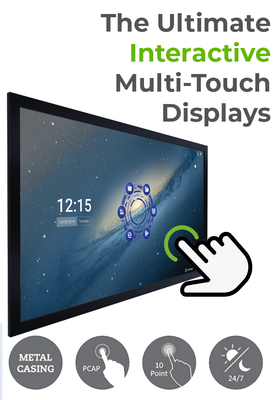
Touch capability is another decision point. An interactive totem can support product browsing, visitor check-in, directories and lead capture. However, touch introduces cleaning, accessibility and interface-design considerations. If customers only need to see an offer or directional message, a non-touch advertising display is usually more cost-effective and less demanding to manage.
Content and software make the display useful
A high-quality screen cannot compensate for an unmanaged playlist. The strongest digital totem campaigns use content that is planned around location and timing. Breakfast promotions can run in the morning, lunch offers at midday and event messaging before busy periods. Retailers can pair campaigns with stock availability, while multi-site operators can combine central brand control with local updates.
Digital signage software should make these changes straightforward. Look for scheduling, user permissions, remote monitoring, proof-of-play reporting where advertising revenue is involved and the ability to manage portrait and landscape layouts. A cloud-based CMS is often practical for distributed locations because authorised users can publish updates without visiting each site.
Keep content purposeful. A good loop might rotate a headline campaign, a supporting product message, customer information and a call to action. The exact number of slides depends on dwell time. A queueing area can support a longer playlist than a busy entrance where people pass quickly. Motion can attract attention, but constant rapid movement can make a display hard to read and may not suit every environment.
Installation is part of the solution
Freestanding digital displays need professional positioning, safe cable management and, in many cases, secure floor fixing. This is especially important in public areas, schools, hospitality venues and retail sites where the unit may be close to children, luggage, cleaning equipment or high footfall.
Before installation, confirm the viewing line, floor construction, nearby power, network route and access restrictions. Consider how the unit will be moved into the building, particularly for larger screens, and whether the installation can take place outside trading hours. These details affect cost and lead time, but resolving them early prevents disruption later.
For multi-site roll-outs, consistency is often more valuable than choosing a different model for each location. A standardised hardware and CMS setup simplifies training, spare stock, content templates and support. There can still be exceptions for unusually bright windows or outdoor spaces, but the wider estate benefits from a repeatable approach.
Screen Moove can support businesses with commercial display selection, signage software, installation planning and the practical requirements of a managed signage network. The objective is not to sell the largest screen available. It is to supply a totem that fits the environment, campaign purpose and operational demands of the site.
A digital totem should be treated as an active communications asset, not a static fixture. Start with the customer journey, choose hardware that can handle the environment and give one person clear ownership of content. When those elements are in place, the screen has a reason to be noticed every day.


